
Blending cookies & cream: A capability impact assessment

Imagine you work for Confection Joy, a regional creamery with 8 storefronts and over 50 employees in Minnesota and Wisconsin. They've built a loyal following with unique flavor combinations, and now they want to expand – geographically and creatively.
Three states over, Cushy Cookies serves freshly baked classics and creative combinations across 12 locations in Iowa, Illinois, and Indiana.
Confection Joy's owners are making a bid to acquire Cushy Cookies.
Your job: Assess what it will actually take to merge these two beloved brands without destroying what makes them special.
Welcome to the Cookies and Cream initiative.
Why this matters: The risks of getting it wrong
Confection Joy's owners are right to be cautious.
We are talking about two adored brands, and we don't want to tank them. How to manage costs, employee morale, and customer experience during this time are paramount concerns. You don't want to move too fast or too slow. And you want a clear narrative on what people can expect at the moment the deal closes.
The ultimate question that needs answering is:
Where do you merge, integrate, replace or keep as is?
Capability impact assessments are a great first step towards answering these questions.
Sweet treat retail capabilities: A common list of ingredients
The goal is to adopt a triaging mindset and do a rapid, but comprehensive, assessment of our initiative.
The tool is based on capabilities, which describe what we do, not how we do it. The how can change anytime - but for ice cream and cookies, the core capabilities should be nearly identical and stable:
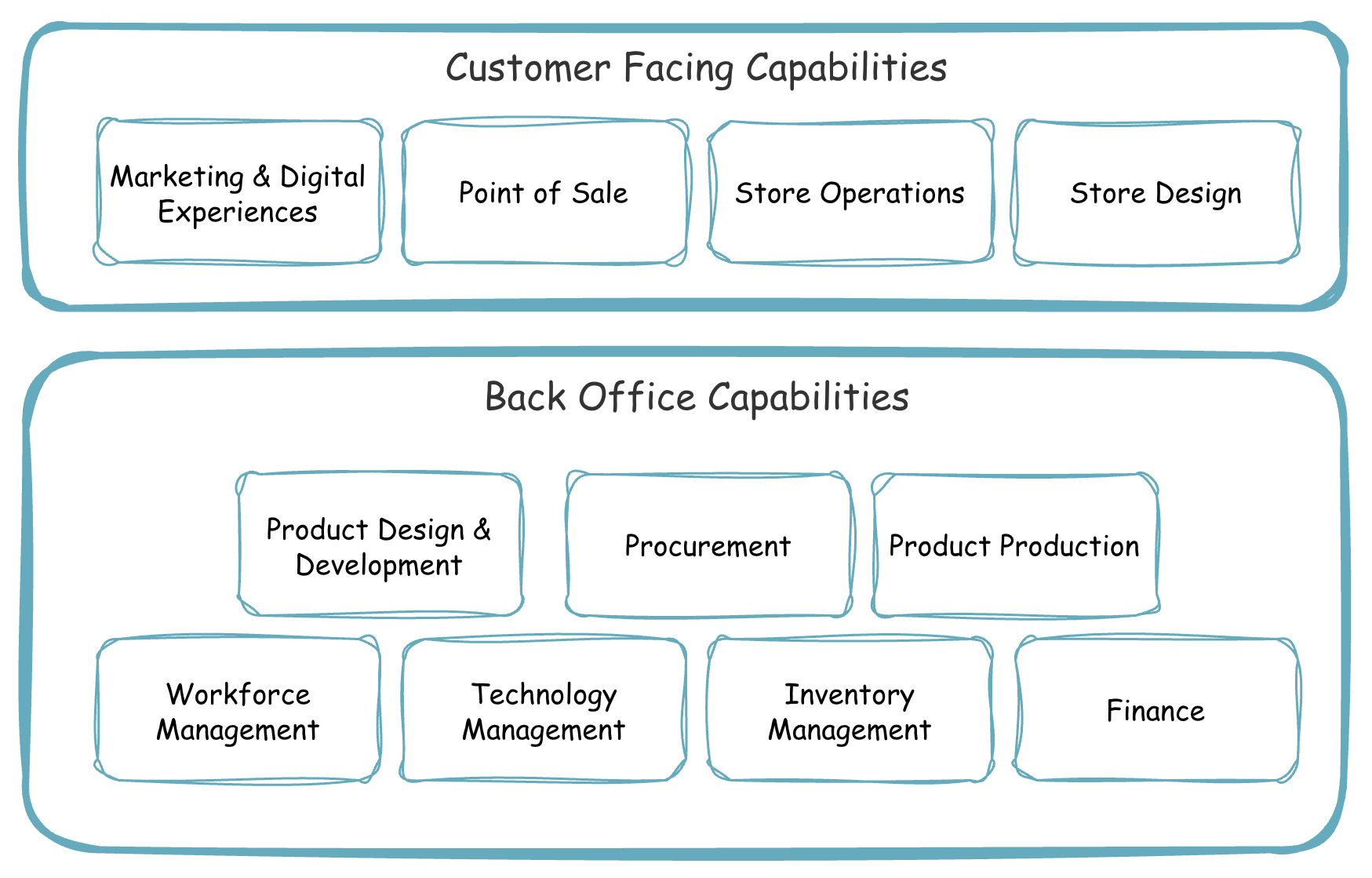
Since the two companies have their own implementations for each of these capabilities, there is a lot of redundancy to consider.
So, what needs merging and what doesn't?
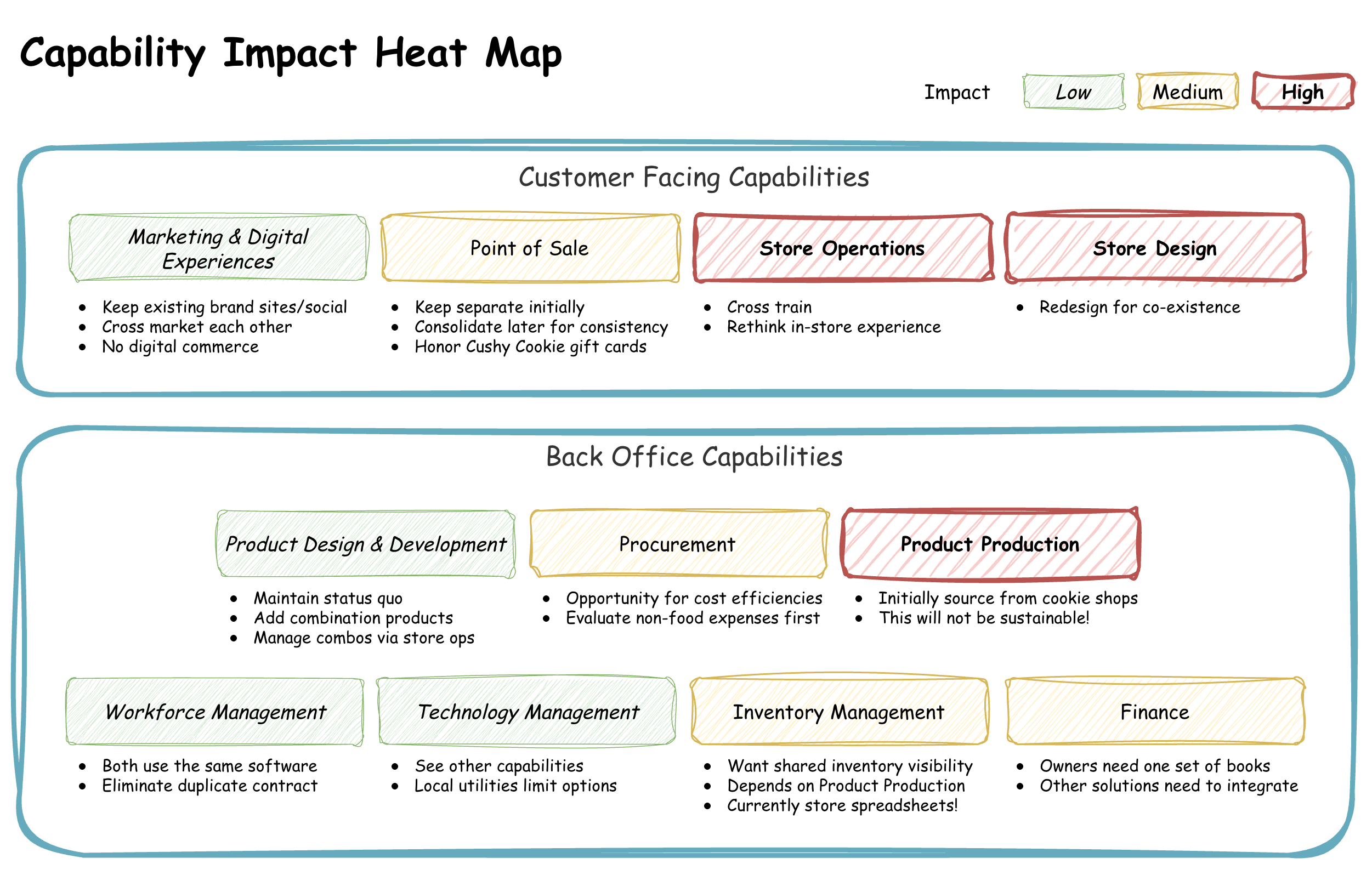
To answer this, we assess the impact of merging for each capability, noting our key assumptions – making it easy to re-evaluate later if reality proves different (as is often the case).
A heat map format provides a concise overview:
Potential flavor combinations: The merge decision playbook
How do we turn these impact assessments into actionable hypotheses? Luckily, there are five strategies that cover most scenarios:
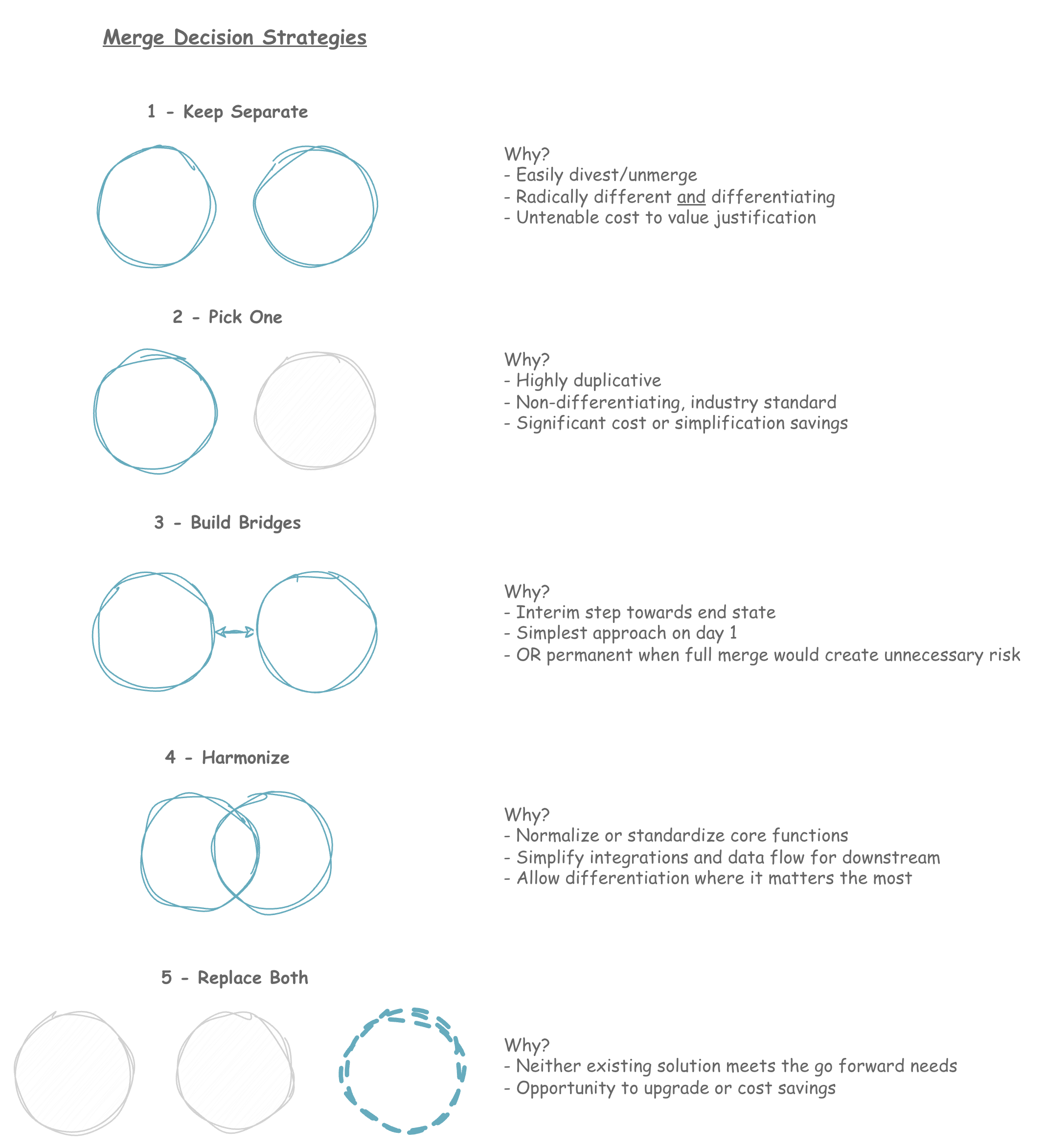
We need one more element before we concoct our hypotheses – the definition of what a good and well balanced outcome should look like.
The principles to guide us
A good chef knows that when developing a recipe, you start with a general idea of what you want to do, but then you need to evolve it through a testing and learning mindset.
For Cookies and Cream, the owners have provided us with this:
- Amazing products and customer experience are non-negotiable
- Ice cream shops will expand with cookies first
- Cookie shops continue operating until each location is identified to be converted or closed
- If the merger fails, the cookie business could be sold - but only the brand and IP (recipes), not the physical locations
- Managing expenses and economies of scale are paramount for long term financial viability
Now it's our turn to evolve the vision, and fill in some details.
Picking flavor combinations: How to apply the strategies
Let's look at a few examples to illustrate how to establish a merge strategy hypothesis for each capability. We'll evaluate whether each merge strategy supports our guiding principles, creates risks, or remains neutral.
Product Design & Development
Impact Assessment: Low
Impact Assumptions:
- Status quo
- Add composed products (e.g., ice cream sandwiches)
- Manage combos via store operations
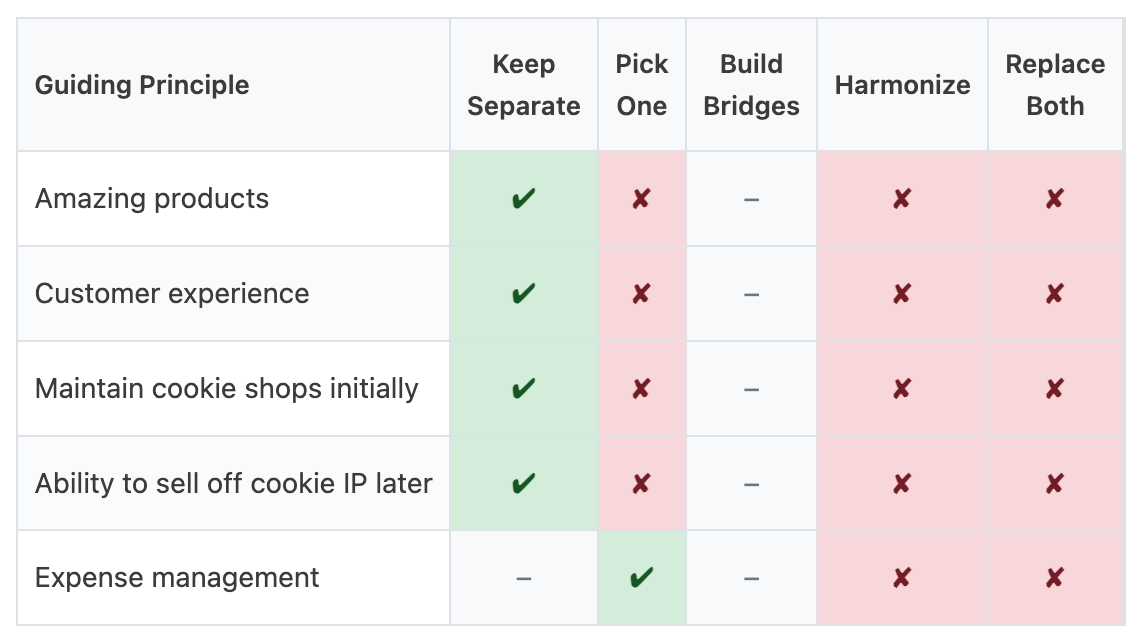
Goal Strategy: Keep Separate
Interim Strategy: Unnecessary
Why Keep Separate?
Ice cream and cookies succeed because of their distinctive recipes. Force them to share a product development process and you risk bland compromises. The cost of running two small development teams is minor compared to the brand damage from watering down what makes each special.
Finance
Impact Assessment: Medium
Impact Assumptions:
- Owners will need one set of books
- Other solutions feed into this capability!
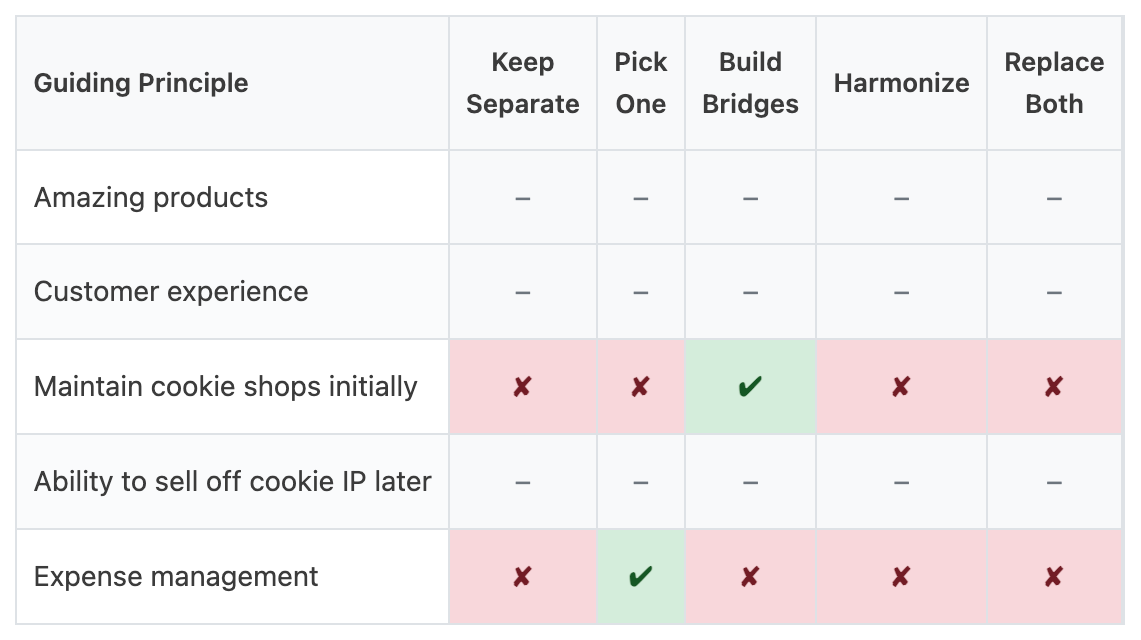
Goal Strategy: Pick One
Interim Strategy: Build Bridges
When principles conflict
Notice that Finance shows Build Bridges supporting "maintain cookie shops" but risking "expense management." This tension is real - continuity costs money. Build Bridges is the compromise: keep operations running while absorbing integration costs short-term, knowing consolidation will pay off later.
Our merger recipe: A complete capability strategic roadmap
Here is the complete roadmap:
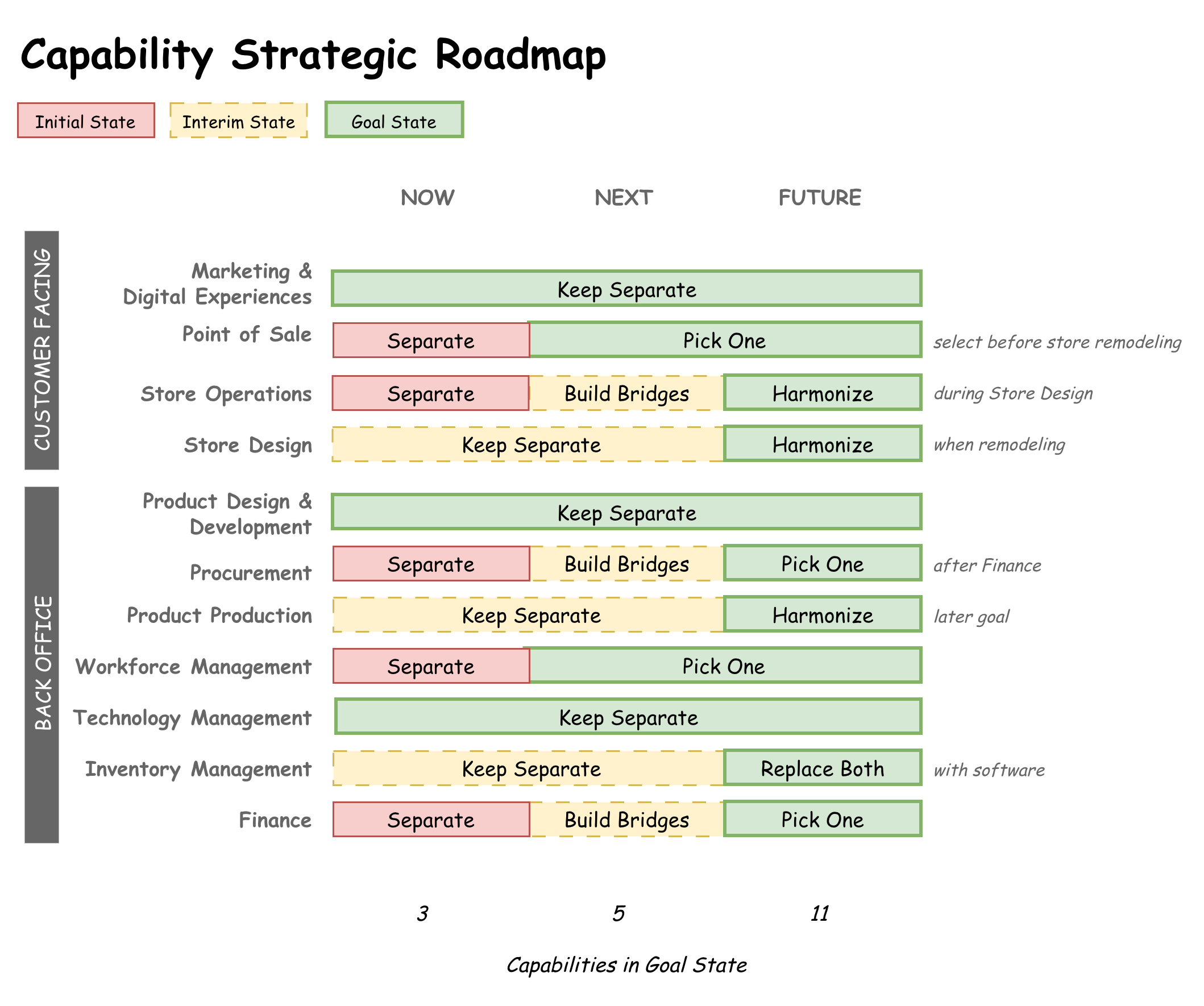
Pay attention to the timing notes (shown in gray italics):
- Procurement → "after Finance": You can't consolidate vendor relationships until you have unified financial reporting to track spend across both businesses
- Point of Sale → "select before store remodeling": Pick the system before renovation so you know what hardware to install - not after remodeled locations open
- Store Operations → "during Store Design": Cross-training happens while stores are being physically redesigned
- Inventory → "with software": Replace inadequate spreadsheets with real inventory management
These dependencies matter. Get the sequence wrong and you'll redo work or create bottlenecks.
What happens without a roadmap?
As soon as the deal is inked, individuals will either rush ahead blindly or sit back and wait.
Store Design spends six months on beautiful renovation plans - only to discover the new layout doesn't support the harmonized operations model. Rework costs sink the budget.
Store managers are left clueless, allowing confusion and fear to seed itself in the staff. Customers can feel the negativity, and traffic drops.
The roadmap prevents chaos by communicating the full picture and acknowledging sequencing.
Present your creation
It's time to share your assessment, including assumptions and rationale, with Confection Joy's owners. Remember, they are looking for anything significant they didn't consider yet that could give them pause.
Not only that, but they will appreciate you have provided a holistic next step guide if the merger goes through! The framework will help you assign owners for next steps and launch the detailed strategic architecture work - where you will show how everything will need to stitch together.
The recipe will be passed forward to evolve.
Which is where we will pick things up in the next post.
Reflection
Before you move on, pause for a moment:
What capabilities are relevant to your situation?
Do you have opportunities to rationalize a capability's implementation variations?
What guiding principles would you apply to your assessment?
References
Have questions or thoughts about this post?
Email me at hello@eaforeveryone.com or connect with me on LinkedIn.