
What makes architecture transformations succeed

Architecture transformations succeed when organizations bridge the gap between PowerPoint strategy and real execution. You've seen the map. The difference between transformation that delivers and transformation that stalls comes down to five critical success factors.
Success Factor 1: Setting a rhythm around the ebbs and flows
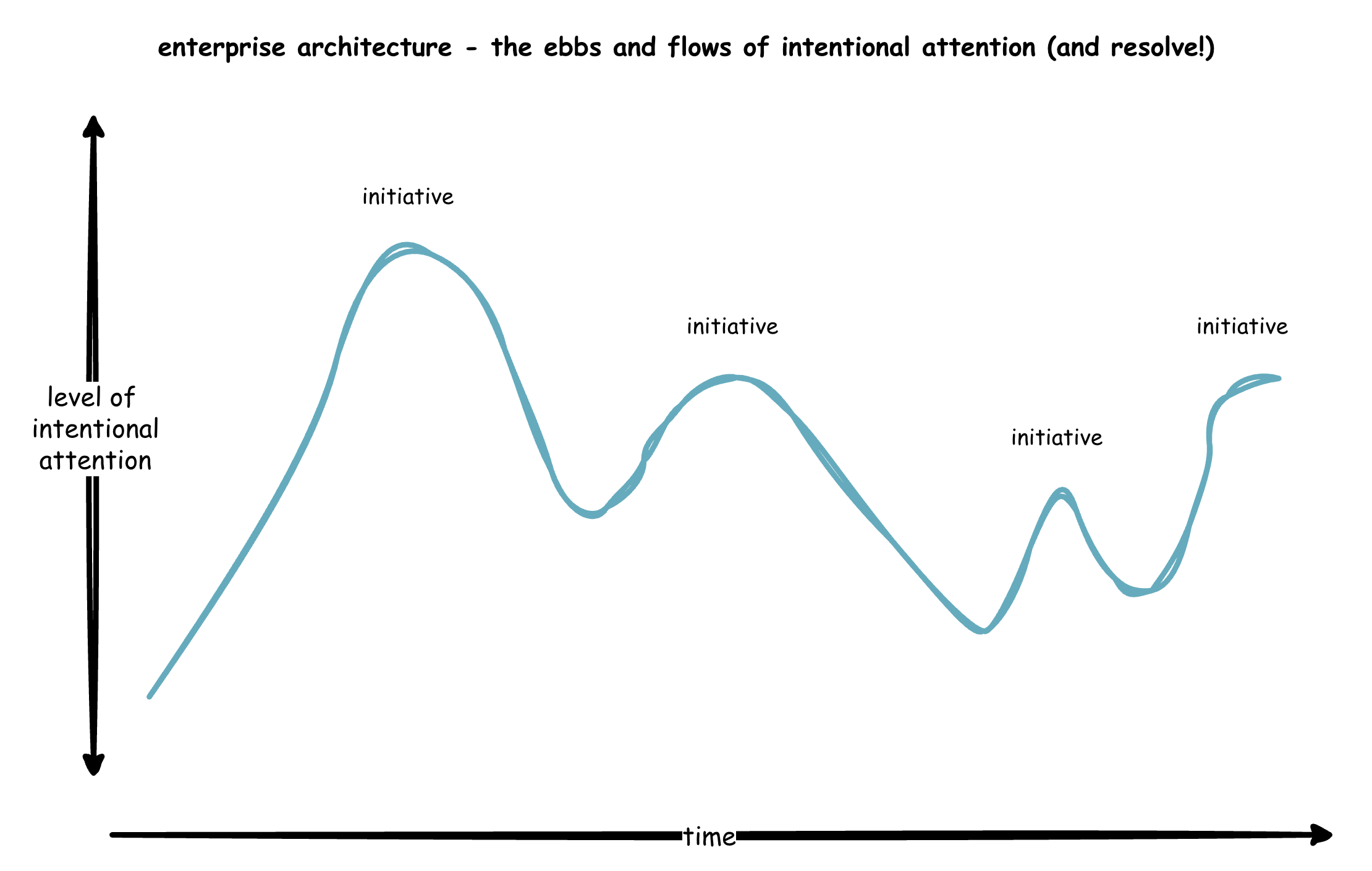
Between altitudes and pillars, the systems and sub-systems of your enterprise architecture are not just complex but also ever-evolving. There is always something to learn and improve – architecture is continuous evolution, not a destination.
If you treat your architecture investments as a destination – a project with a finish line – you'll always be reacting to yesterday's challenges instead of solving for tomorrow's.
By establishing routines that embrace continuous evolution, you reduce the organizational effort required for each change. Each initiative builds on the last, making subsequent improvements easier and faster — the lift for your teams should feel less disruptive over time.
Success Factor 2: Building in the extended team
Architecture is a team sport.
Change across an entire organization is hard work and requires a diversity of perspectives to shift to a new normal.
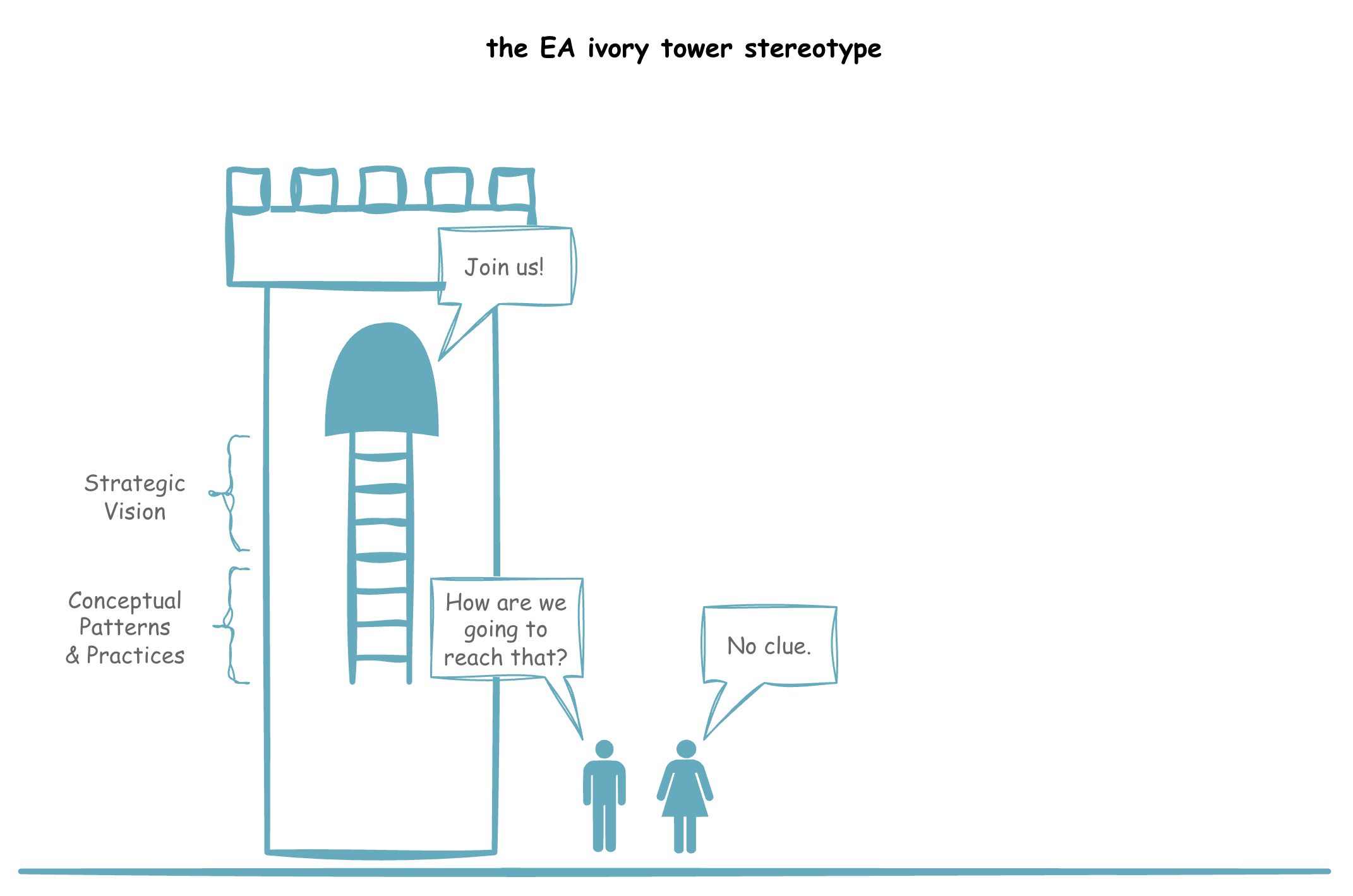
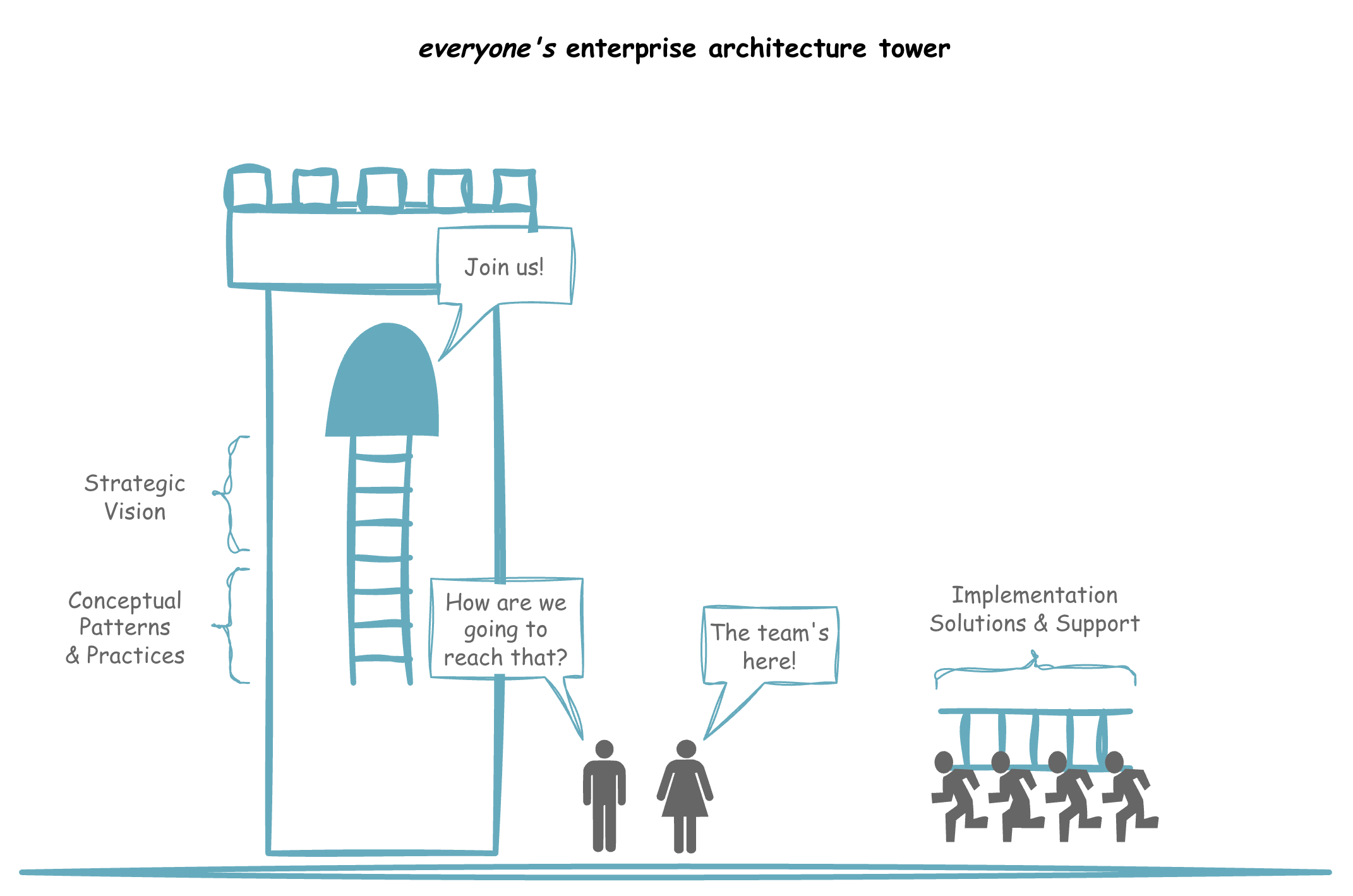
Even if you have an uppercase EA team with Enterprise Architect roles, they cannot do this work alone. Each burst of activity requires organizational attention, not only the EA team's attention. Assuming it's the EA team's job alone reinforces the stereotype of EA as an ivory tower – disconnected from the realities of delivery.
Depending on the initiative, you may need:
- Specialists/subject matter experts
- Organizational restructuring
- Program management
- Training
- Development of tools and automated solutions
- Managed services
- Inventories
- Metrics, insights and progress tracking
The rest of the team helps bridge the gap from the strategy to reality.
Success Factor 3: Investing in tools and automation, early
Once you reveal the big strategy, the clock starts ticking. Demand spikes. Teams want to start aligning immediately – and they don't want to create new debt by doing things "the old way."
That means it's critical to understand the scenarios your organization will face, and have at hand not only patterns for approaching the shift, but real-life tools and automation to make it as easy as possible to do the right thing.
For example: when moving to a new cloud provider, automated compliance scanning catches violations before deployment. When establishing data standards, tools automatically catalog what exists. Teams can focus on building, not on manual governance checklists.
Building solutions that make the right thing automatic delivers far better ROI than traditional governance approaches that rely on manual compliance.
Make the right thing the easy thing.
Success Factor 4: Harmonize your investments
It's tempting to focus on improving one pillar at a time. For example, it can feel natural to work right to left, focusing first on evolving and simplifying Technology architecture. This isn't a bad place to start as it can provide stability to the other pillars by frontloading the turbulence of shifting infrastructure.
However, truly successful organizations take two approaches:
- Look for opportunities to combine improvements across pillars. For example, moving to a new cloud environment is the perfect time to establish improved practices around Applications or Data.
- Prioritize People and Process early — even though they're hard. These shifts often reduce complexity in Data and Applications, making those improvements easier.
By creating rhythms that consider the full map and find ways to harmonize improvements, the cognitive load on your pilots will reduce and you will get the outcomes you seek much quicker.
In practice, you'll benefit from running multiple improvement initiatives simultaneously – especially when they reinforce each other.
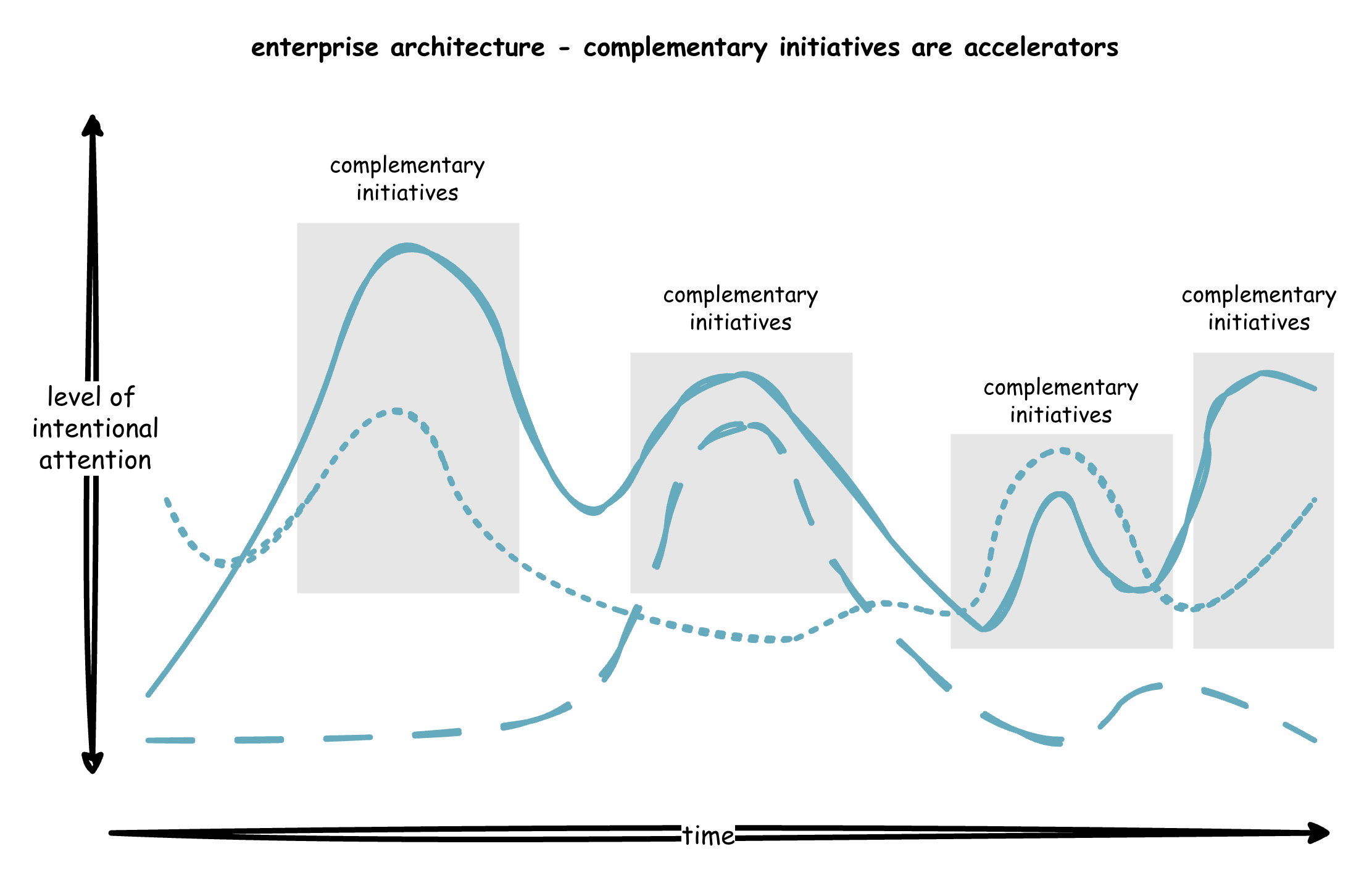
When improvements overlap intentionally, each one amplifies the others. This is how architecture transformations accelerate instead of exhaust.
Success Factor 5: Top level leaders set the tone (and accountability expectations)
Architecture transformations succeed when top leadership actively champions the work. Culture - and your organization's resolve to complete long-haul missions - flows from the top.
Without this support, even the best EA teams struggle. It's like running air traffic control across incompatible communication channels while pilots fly without guidance. Progress happens in pockets, but full-scale transformation stalls.
Successful transformations have top leadership actively championing:
- Architecture transformations as strategic priorities
- Incentivizing teams as accountable change agents
- Protecting the mission from distraction and ensuring sustained investment
Up next: navigating your map
These five success factors accelerate architecture transformations:
- Setting a rhythm around ebbs and flows
- Building your extended team
- Creating tools and automated solutions early
- Harmonizing investments
- Top level leaders set the tone and accountability expectations
Now that you know what to strive for, we can put the placemat to work. In the next series, we'll evaluate your current state and identify where to begin – with clarity and confidence.
Reflection
Before you move on, pause for a moment:
If you could only focus on one factor, which would unlock the most progress?
What would it take for your organization to fully embrace these success factors?
References
- None
Have questions or thoughts about this post?
Email me at hello@eaforeveryone.com or connect with me on LinkedIn.