
From triage to treatment plan: Building shared understanding

You have your architecture hotspots, assigned a captain to each, and set a clear timeframe to propose courses of action.
What should your captains be doing to prepare the next decision?
In this post, I'll show how I approach this work by building shared context with the right specialists.
In architecture flywheel terms, we're still in Visioning – but now refining our initial hypotheses about the hotspots.
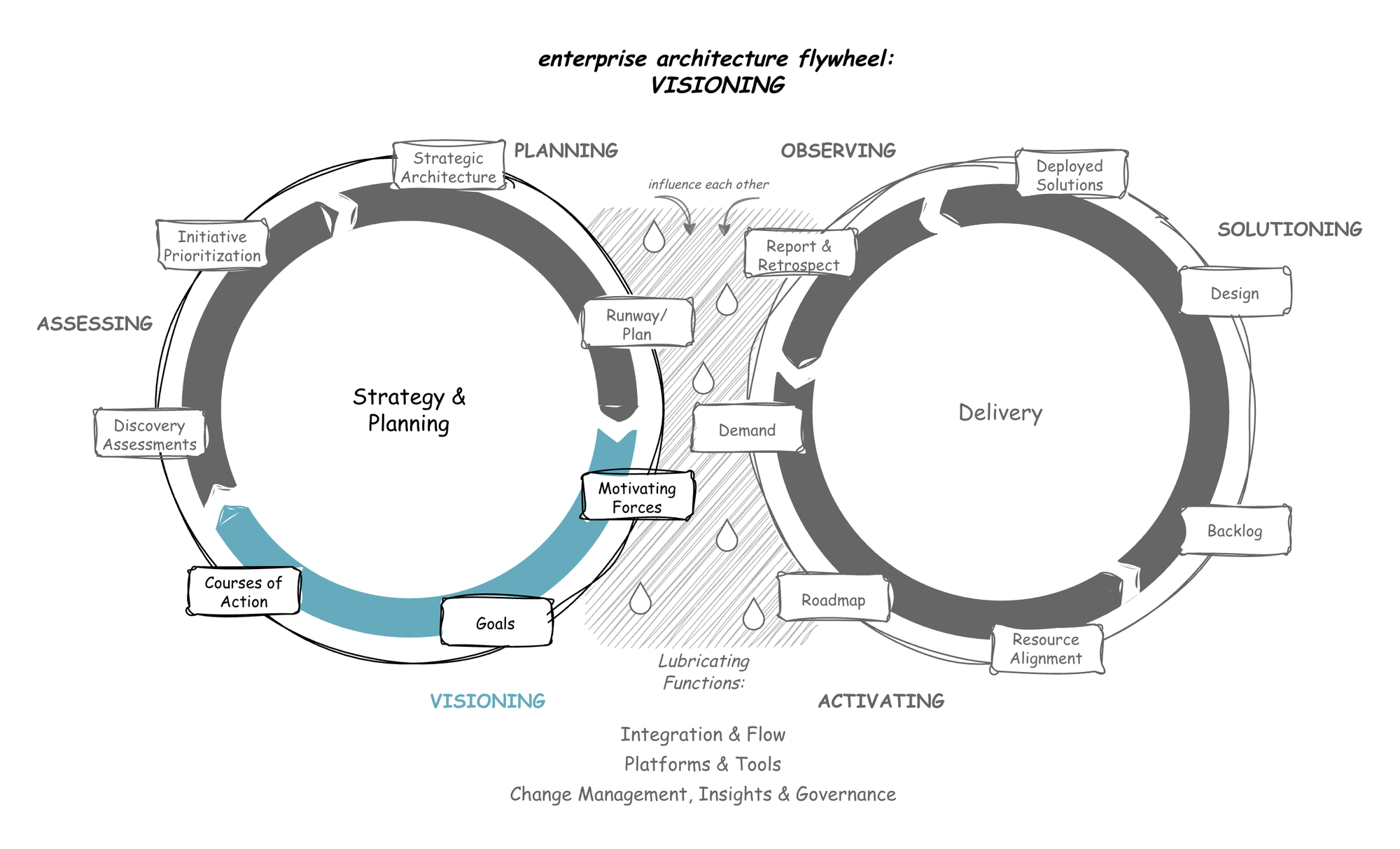
Think of the triage exercise as a Level 0 signal of where attention matters most.
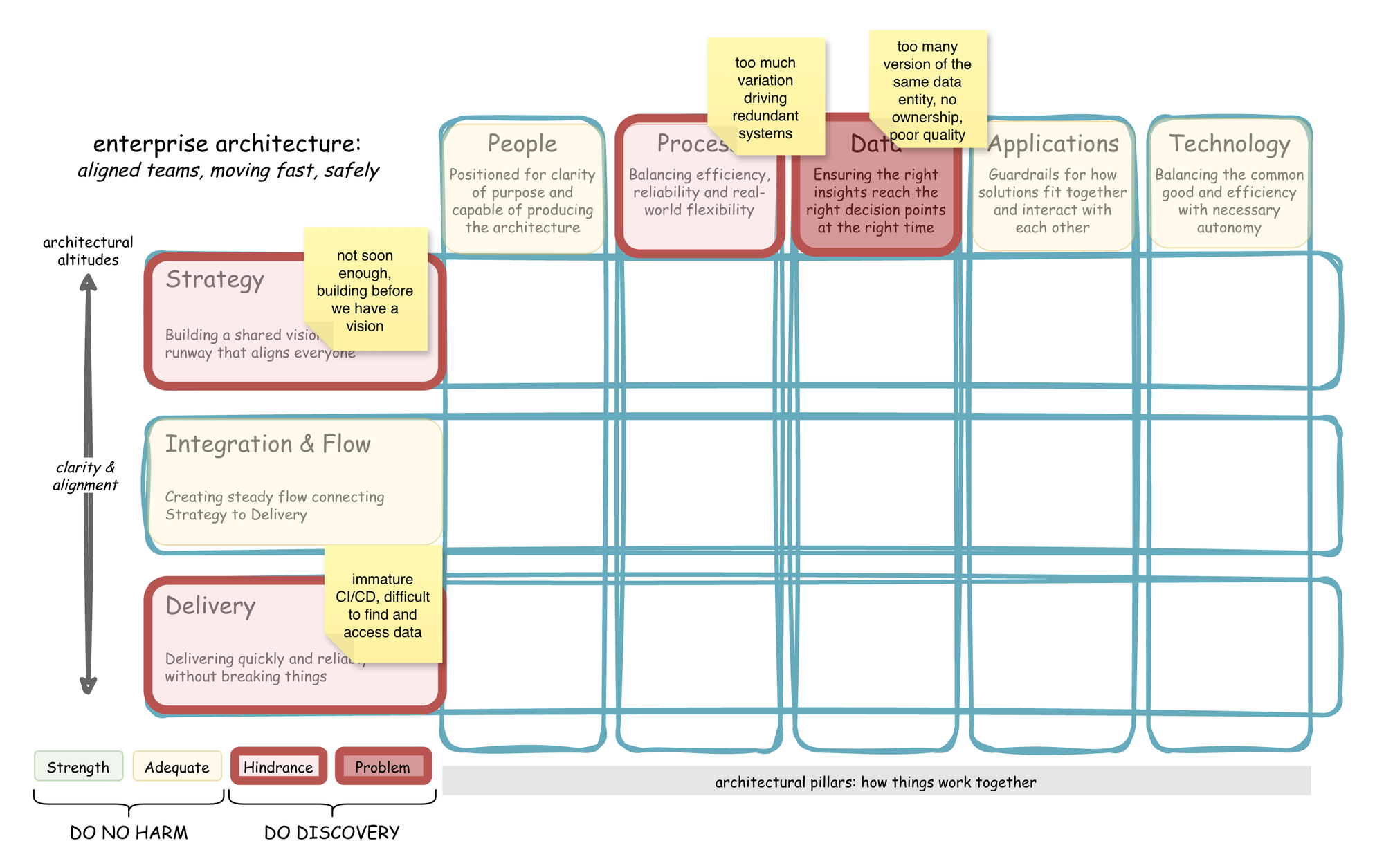
We're descending in altitude now to a Level 1 that begins to inform actual flight plans. Or, to align back to the hospital metaphor, to inform our care plans.
We'll focus on the Strategy hotspot as an example to make this more concrete.
Expand the care team
After the initial triage, we have a better sense of where to focus and that helps us determine who we need to consult. These next steps will be grounded further in the real life experiences and expertise of the relevant practitioners. This leads us to the first question:
Who are the experts we need?
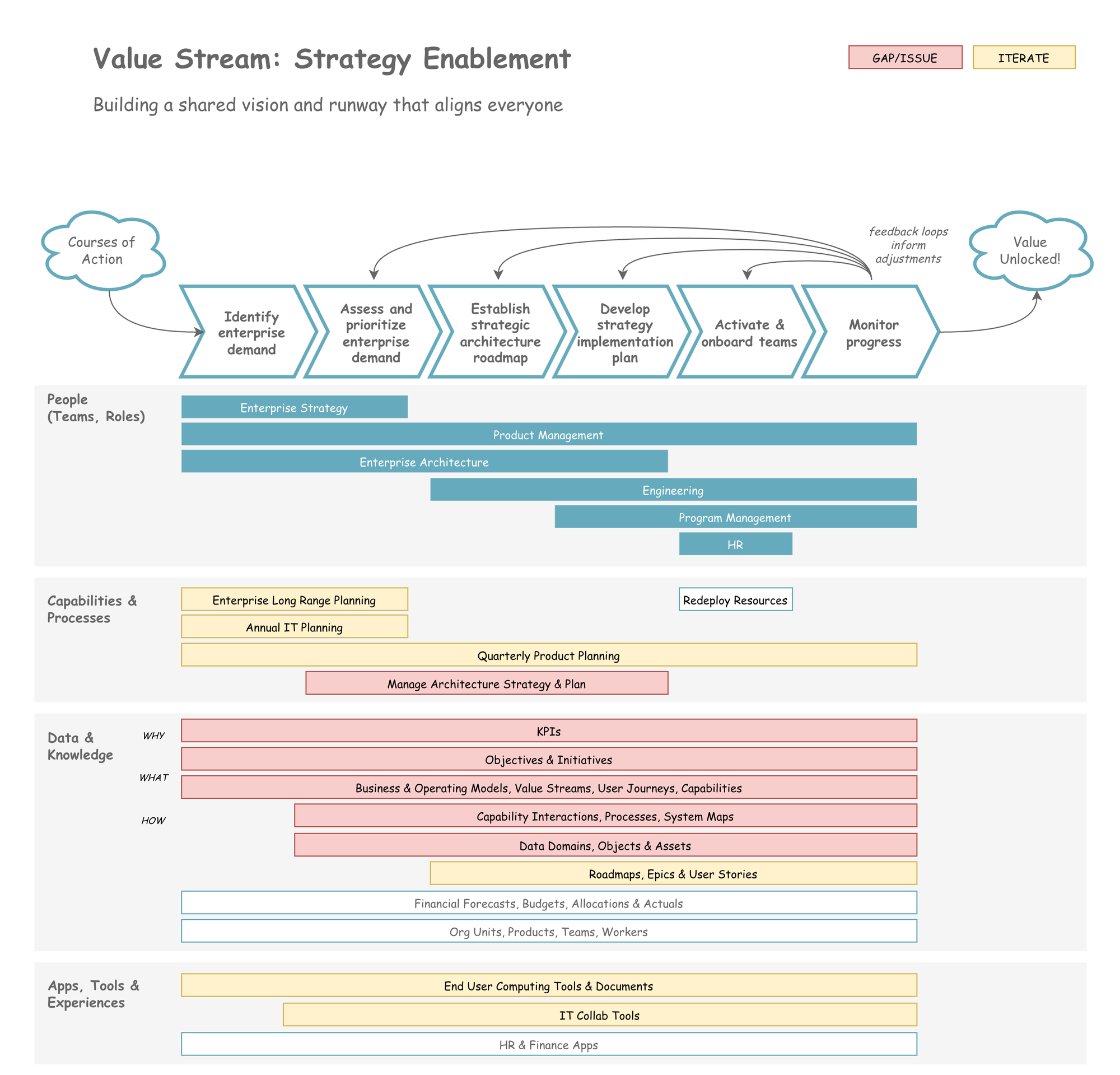
To help answer this, I lean on value streams. These high-level process models depict the end-to-end flow of work and the value it produces.
Value streams provide a relatively stable view of what organizations do.
In fact, many value streams can look virtually the same from one company to another doing similar work. An accounts receivable value stream generally involves negotiating terms, billing, invoicing, accepting payment, managing late payments, and recording receivables. The high level stages are largely consistent, while execution details vary – creating opportunity for improvement and differentiation.
The Strategy value stream fits this mold, with high-level stages that look similar across organizations.
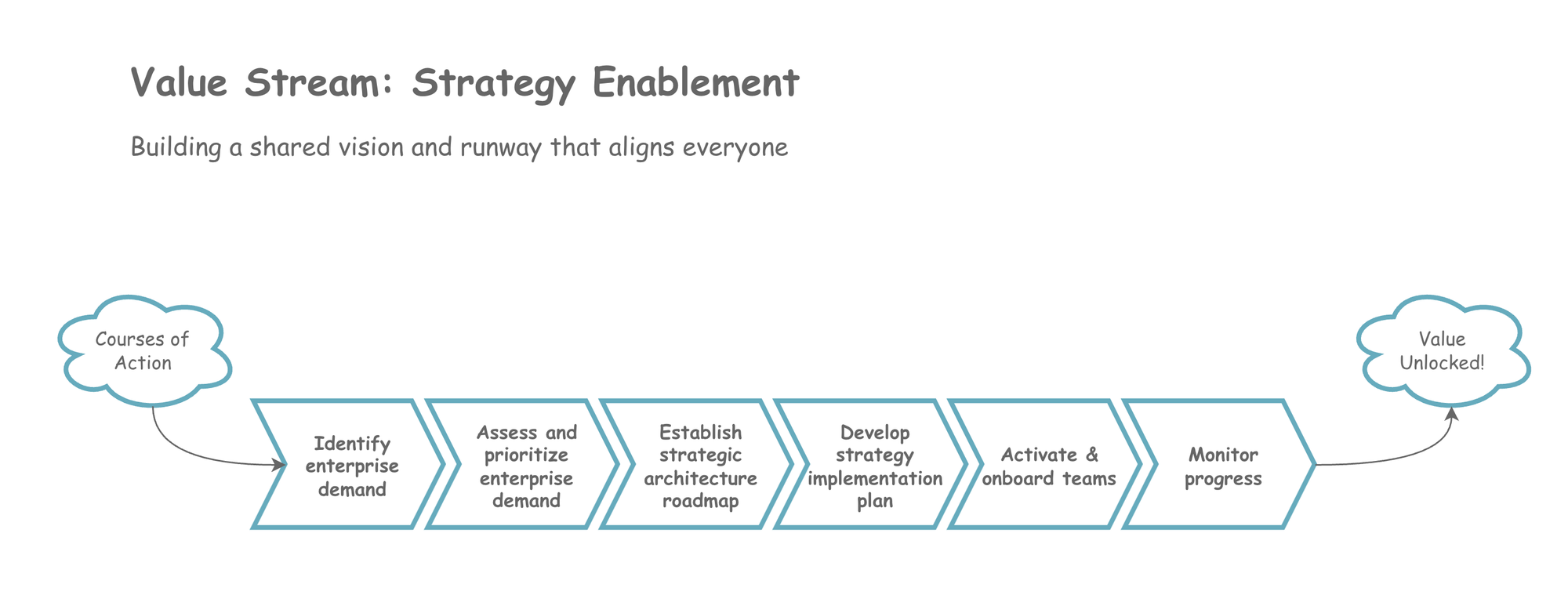
The magic in this model, though, is in adding in the how. This is what helps us answer the question about what experts do we need. Enriching the value stream with People (the teams and roles that influence and participate in each stage) gives us our answer.
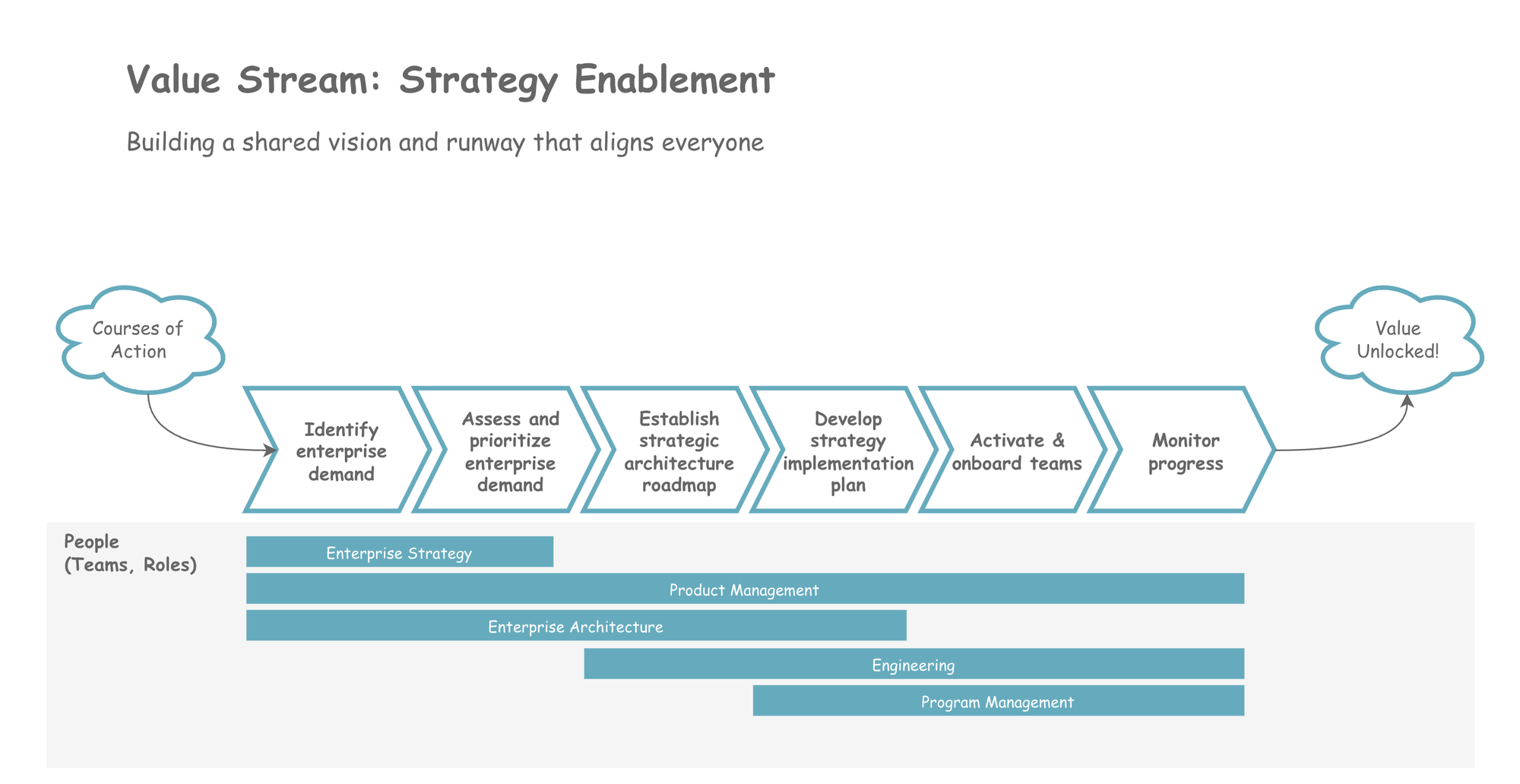
In our case, we've identified a first cut at who we want to involve to collaborate:
- Enterprise Strategy
- Product Management
- Enterprise Architecture
- Engineering
- Program Management
This is your extended care team!
Together you will refine and enrich the value stream you drafted.
The care team's mission and ways of working
You have limited time to refine your hypotheses and committed to returning with a recommendation on a specific date. This bias for action works in hospitals – and it will work for you.
Preschedule working time with your care team focused on these four steps:
- Establish common context focused on what you have, the most significant challenges, and the motivations for improvement
- Align on high level goals that potential courses of action will be vetted against
- Ideate and vet courses of action against goals
- Prepare your proposal for sharing and decision making
NOTE: Step 4. Prepare your proposal will be discussed in the next post.
Typically, this work takes 2-4 weeks with 3-4 working sessions:
- Session 1: Build common context (2 hours)
- Session 2: Align on goals (1 hour)
- Session 3: Ideate courses of action (2 hours)
- Between sessions: Captain synthesizes and prepares materials
I highly recommend not moving on to the next step until you have general agreement on the preceding one.
Resist the urge to jump to solutions.
1. Listen: Building shared understanding
This first session is about listening – not fixing.
After explaining our objective, timeline and the steps of this process, I would set the agenda to accomplish only one thing: Establishing common context.
What did initial triaging identify as our critical issues?
Does the value stream represent a comprehensive view of how things work together?
What do each of our unique perspectives observe?
The beauty of using the value stream as a visual foundation is that it makes a natural frame to take everyone through everything, stage by stage. It enables everyone to participate with their unique views on what is happening, why, and where there is pain. It is such a simple and incredibly effective way to build common understanding, and empathy.
Set the tone so everyone is comfortable to ask questions - to just be curious.
Take notes with no significant editing. I prefer whiteboards (virtual or in real life) using the value stream structure to fill it out in real time, left to right.
When the care team gets off track, invoke ELMO - enough, let's move on - recording the topic into a parking lot.
Some people may get impatient and want to hurry through this.
Don't.
At the end, everyone should have a shared holistic view of the patient's condition, which will lead us to better decision making later. Going slow now will pay dividends later.
Then, after the session, summarize what you built with one another in a common value stream artifact you can continue to revise going forward.
For example, in our Strategy value stream, the care team:
- Affirmed the People were aligned correctly and also noted that HR was missing
- Walked through how enterprise long-range planning (3-5 years) informs enterprise annual planning, which in turn informs quarterly product planning – and where architecture strategy was inconsistently executed
- Enumerated the information required at each stage and the tools currently used
- Indicated where the greatest gaps and issues were based on their experience, and where simpler improvement may be necessary
- Underscored the importance of feedback loops as delivery progressed
2. Align on what "good" looks like
Once everyone has had time to contemplate the big picture, now is the time to attempt to answer together:
What does good look like?
Attempt to keep this list to a handful or less. If you can prioritize them together, even better.
In our case, the group identified four main goals:
- Consolidate enterprise demand, sooner, to allow for common planning and prioritization activities
- Establish more frequent, end-to-end integrated routines for agility
- Create architecture roadmaps consistently for cross-cutting, significant initiatives – before teams start building
- Intentionally design in feedback loops (and relevant adjustments to plans/priorities)
If you find that any goals are contentious, that is actually an amazing discovery. This should be surfaced in your findings because if the organization cannot address the contention, your success will be hindered. Better to name it now, then continue to suffer with it passive aggressively.
3. Ideate, on the biggest rocks
This step can easily go sideways, because it is human nature to solve all of the problems.
Resist.
Not all challenges are created equal. We're still working towards directional accuracy. Keep the care team focused on the most significant problems. I call these the "big rocks" - those issues or decisions that will take more effort than others to move.
Really try to focus:
Based on everything you have discussed, and your definition of good, what pops as the most urgent issues to solve?
What will take the most lift or create ripple effects across other areas?
It can help to layer in the goals from step 2, so you can visualize where there is compounding opportunity against the common background of who, what, where, how and why that the value stream provides.
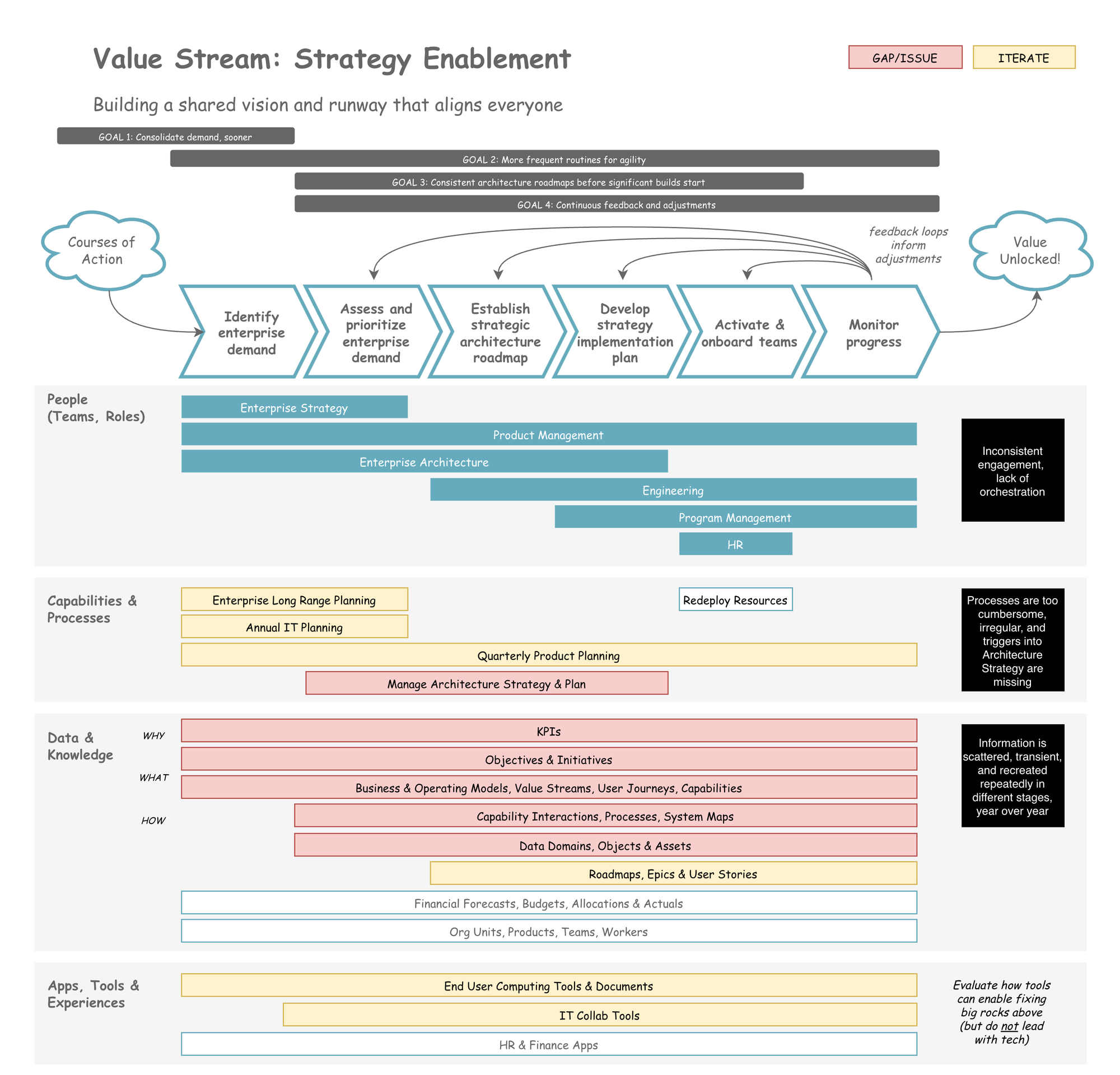
For our Strategy hot spot example, the care team identified 3 "big rocks", and they are actually related to one another!
- Processes are too cumbersome, disconnected and haphazardly executing, creating...
- Inconsistent engagement and disparate strategies/plans resulting in...
- Scattered, transient, duplicative information that leaves us blind to progress and ineffective in delivering outcomes.
We now have a good sense for the biggest areas for improvement and how they affect each other.
This also aligned the care team that solutions must start with process and data – not tools or technology.
Thank the care team
By this time, you are operating as one team, with shared understanding and purpose. You might not agree on everything, but you should know why. This will all be part of the care plan narrative you will surface for decision making, including any hard calls. This is a win! Acknowledge what you did, together.
I can't underscore enough how important this work is. It builds confidence in your proposed courses of action, and sets you up to run what is essentially a relay race as one team.
But first, you need to communicate what you have done and what you propose – clearly and compellingly.
That will be the work of the next post, where we will talk about a few critical content types for taking this work forward.
Reflection
Before you move on, pause for a moment:
Considering your hotspots, which one has the clearest value stream to start with?
What will be the hardest thing for you to facilitate this work?
What's stopping you from blocking calendars and getting started?
References
Have questions or thoughts about this post?
Email me at hello@eaforeveryone.com or connect with me on LinkedIn.