
Architectural pillars: What your pilots need to succeed

In my previous post, we explored architectural altitudes – the three levels where strategy transforms into delivery value. Altitudes give your pilots clarity and alignment so they can move fast, safely.
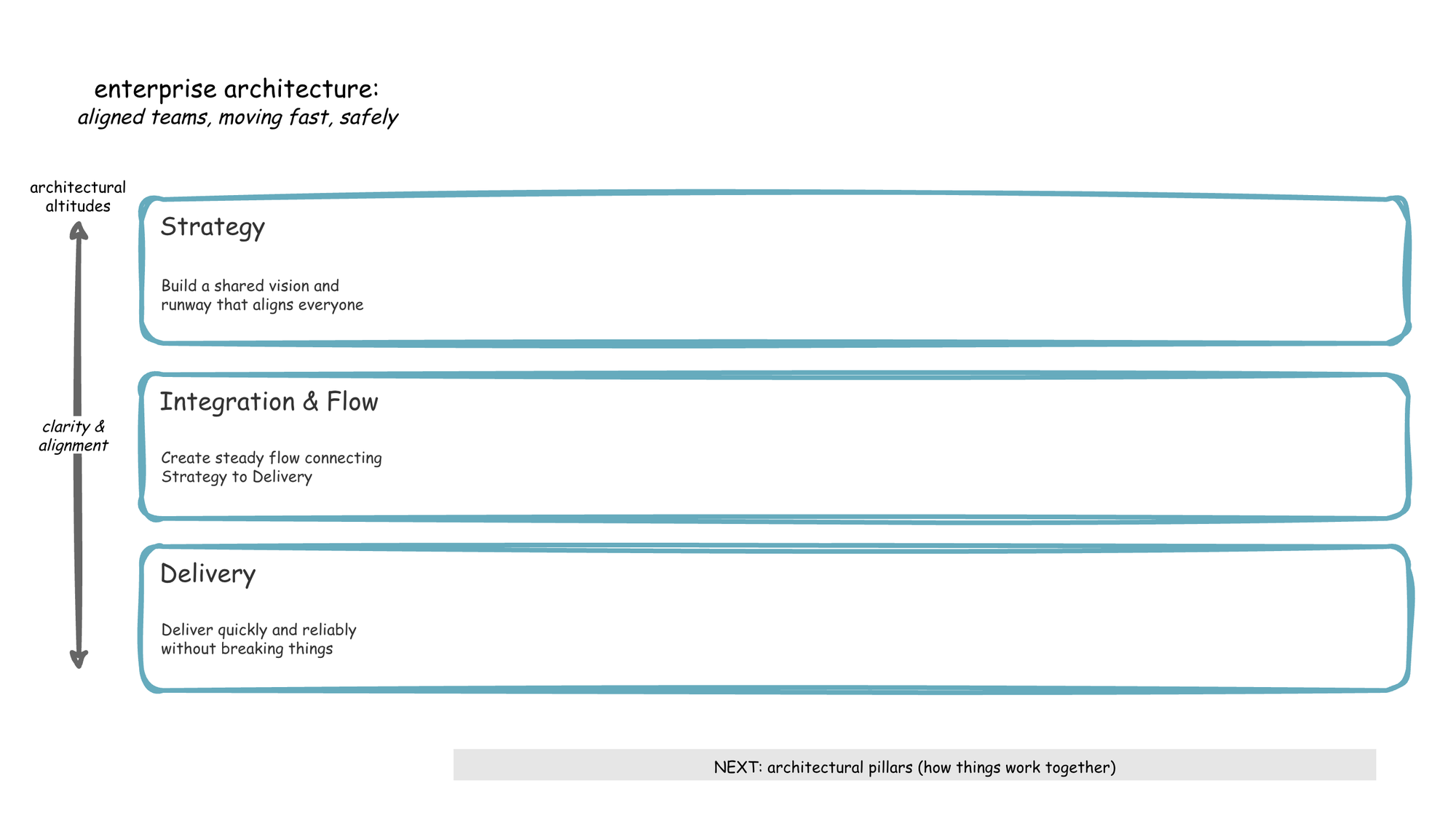
But altitudes aren't enough. They tell you where work happens, not what enables it. So today we ask: what do your pilots need to succeed in their missions?
Architectural pillars: why they matter
Flying — like enterprise architecture — depends on a set of underlying systems working together. Pilots can only fly safely, confidently, and predictably when those systems are strong, reliable, and intentional.
Every successful mission requires five critical systems:
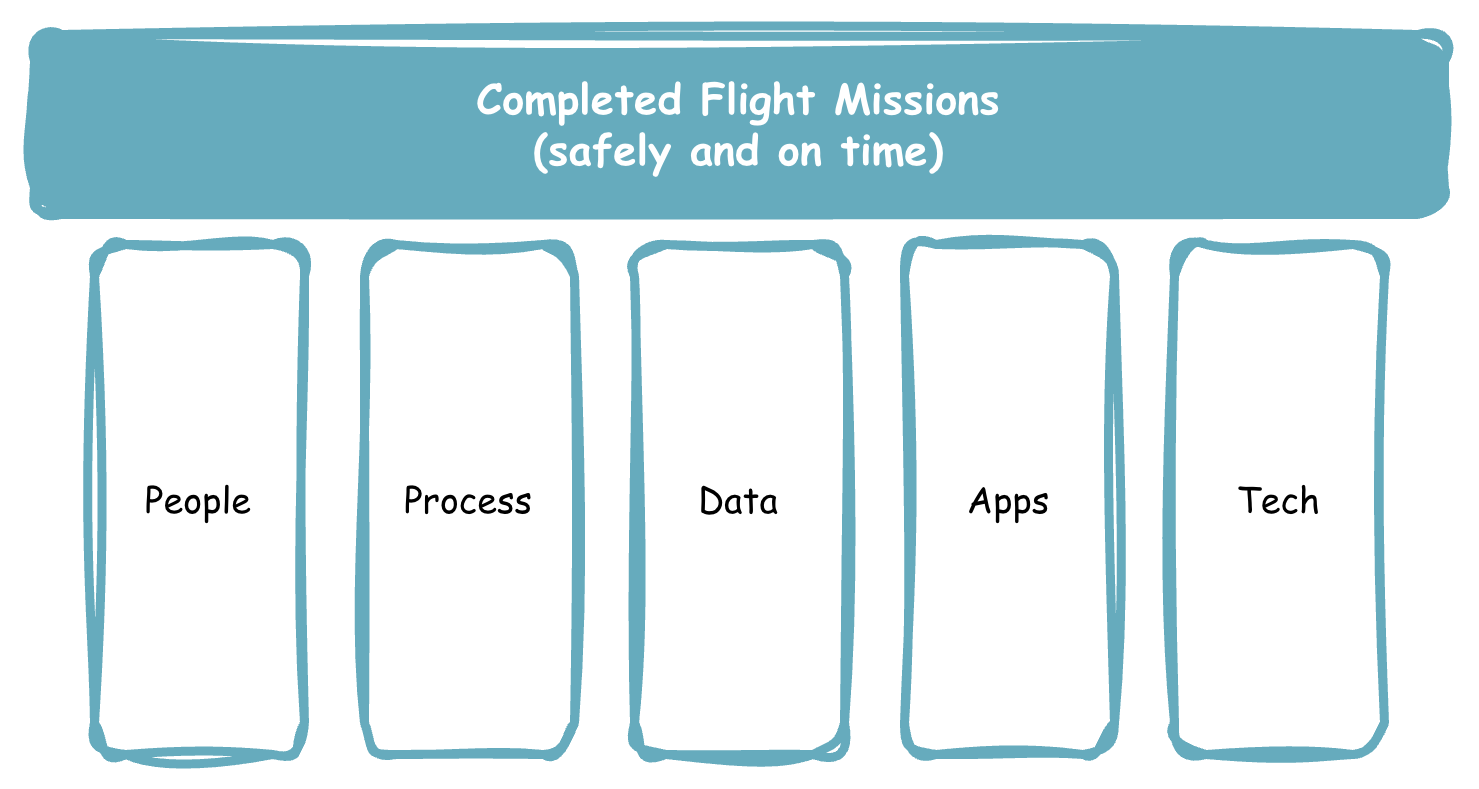
These architectural pillars describe what those systems are – and how they work together across your organization. When you combine pillars with altitudes, you get a complete picture: how work moves and what supports it.
Only then can your teams navigate complexity, avoid collisions, and deliver safely at speed.
Flying is a team sport
The People pillar
Your organization may be full of dazzling pilots, but they don't fly successful missions on their own. Their team includes:
- Other pilots: peers at their altitude and those above and below them for cross-altitude missions
- Air traffic control: help them see, prioritize, avoid conflict, and relay critical information
- Crews: both in the aircraft and on the ground – including runway staff, mechanics, and the services that keep operations running smoothly
- Operations: equipment maintenance, suppliers, and logistics
- Infrastructure: communication towers, runways, transportation between terminals
For your pilots to thrive, you must position your People:
- At the right place
- At the right time
- With the right skills and mindsets
- Towards the right incentives
- With the right support systems
Architectures reflect the structures that created them – this is Conway's Law, and it means your People pillar directly shapes every other pillar whether you plan for it or not.
The People pillar ensures your organization is intentionally positioned for clarity of purpose – and capable of producing the architecture you want.
Procedures provide consistency, repeatability, and reliability
The Process pillar
As a pilot, you rely on muscle memory for routine procedures and quick judgment when situations change. Standard operating procedures exist to provide consistency during normal operations and confidence during abnormal ones.
Too many variations? Cognitive overload.
Too rigid? Constant exceptions.
The Process pillar balances both – creating procedures simple enough to execute reliably and flexible enough to account for real-world nuance.
A vast set of telemetry and the insights to identify the signals from the noise
The Data pillar
Modern flight depends on enormous streams of information – emitted, consumed, processed, and acted upon by many personas. Pilots rely on data that is:
- Complete
- Accurate
- Timely
- Accessible
- Cohesive
Pilots need to be able to react immediately to a sensor alert and then confirm or deny with other telemetry if the alert is real or just a problem with the sensor.
In other words: they need to be able to trust and cross-check the data, whether decisions are made by automation or by people.
The Data pillar designs and maintains the information ecosystem so the right insights reach the right decision points at the right time.
Software is constantly evolving the experience of flight
The Applications pillar
We've come a long way from the Wright brothers, and that is largely because of the applications that provide:
- User experiences tailored to each persona's role
- Information exchange and function execution between complex systems
- Process automation to make routine decisions
The more consistent these solutions are, the easier it is for a pilot to fly different types of planes and different routes safely. Air traffic control also benefits from simpler decision trees when communicating with all pilots.
The Applications pillar provides the guardrails for how solutions fit together and how they interact with each other. Fewer variations allow you to "plug and play" reliably as business needs evolve.
Providing dedicated runways and private airports for each pilot simply isn't practical
The Technology pillar
Common infrastructure and protocols not only provide a foundation for everything above, but are also more cost-effective.
Shared capabilities should be available to everyone – at least within that aircraft class. Airports, runways, fueling services, de-icing, communications,...
Imagine if every pilot needed to identify, procure, and ensure operations of these services. Or if different versions of ground control were operating at the same time. Establishing shared services is truly the only way to go.
Yet there are always specific needs that shared services can't solve. Crop dusters need specialized equipment. Medical helicopters need different capabilities.
The Technology pillar balances the tension: the common good and efficiency versus necessary autonomy.
Everything you need to fly safe, successful missions
Together, architectural altitudes and pillars give you everything you need to begin making intentional, strategic investments in your enterprise architecture.
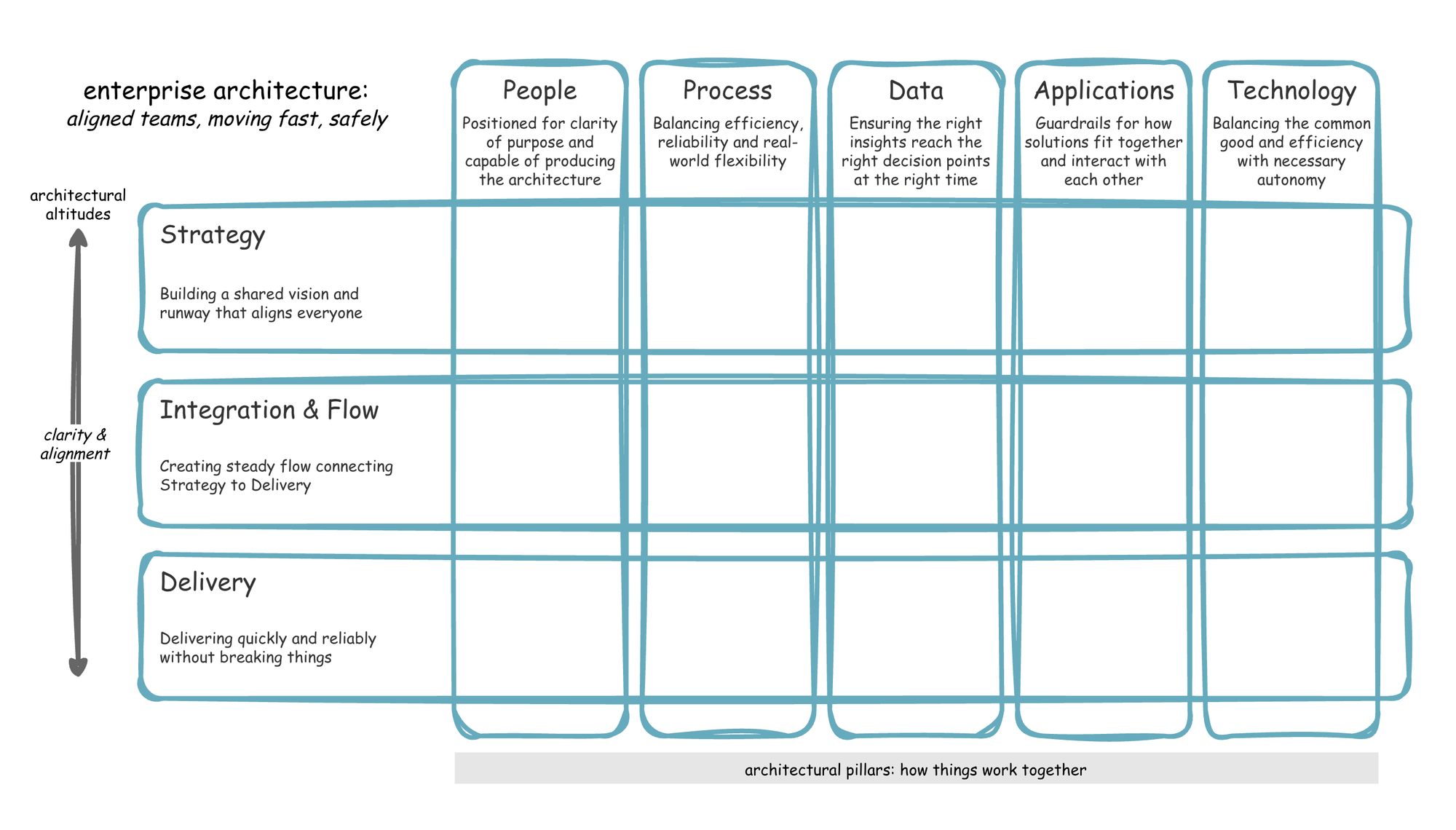
This Level 0 placemat provides a simple mental model for everything that comes next. When deeper topics feel overwhelming, return to this placemat. It will show you exactly where you are and why it matters.
But for now, let the framework sink in. You have the map. But having a map and successfully navigating are two different things. Next, we'll look at why architecture transformations fail – and what it takes to succeed.
Reflection
Before you move on, pause for a moment:
- People: Where are your pilots flying without the right crew support?
- Process: Which procedures are so rigid they break, or so loose they're ignored?
- Data: Where do your teams not trust the data they're getting?
- Applications: Where are inconsistent experiences slowing your pilots down?
- Technology: What shared services are missing that every team is building themselves?
References
Have questions or thoughts about this post?
Email me at hello@eaforeveryone.com or connect with me on LinkedIn.