
Architectural altitudes: Coordinating your pilots
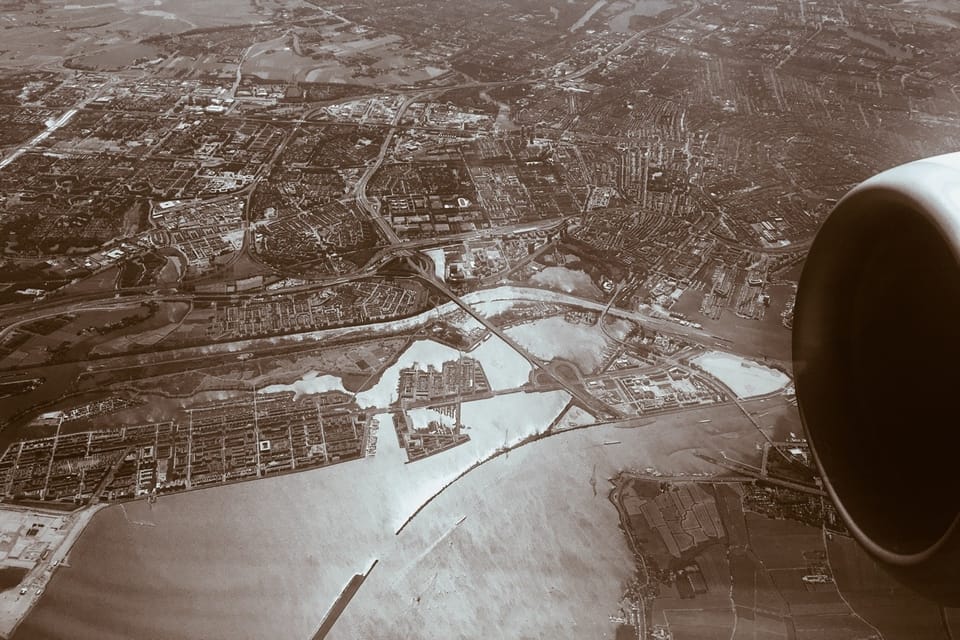
In my inaugural post, "Lowercase ea: What it is and why it matters", I described how you have an enterprise architecture whether you designed it that way or not. That's your lowercase ea. (Not to be confused with an uppercase EA team in your organization.)
I also introduced this idea: if you want to change your enterprise architecture, you must architect the change. And to do that, you need Shared Vision & Resolve. Shared vision almost always needs a shared picture!
Over this series of posts, we're going to shape the layers of a framework I use to communicate what an enterprise architecture practice entails. By the end, we'll have a single shared (one page!) view that helps us see what we have, what we wish we had, and how we can move forward together.
We begin with architectural altitudes.
Why architectural altitudes matter
There are simply a lot of people contributing to your enterprise architecture: architects, engineers, product owners, business partners, analysts, and more. All of them are practicing the art and science of building solutions through countless decisions and activities.
Without effective systems to organize the work, you can get chaos – misalignment and unnecessary churn emerge quickly.
Thinking in altitudes gives you:
- Clarity - Everyone knows their role and how they contribute, AND
- Alignment - High-level vision guides without micromanaging
Which results in:
- Speed - Teams can move fast without waiting for unnecessary approvals
- Safety - Clear boundaries prevent conflicts and wasted effort
Let’s bring this to life through a metaphor.
Architectural altitudes help us coordinate all the pilots
Imagine all of the people in your organization as pilots flying in shared airspace, at the same time.
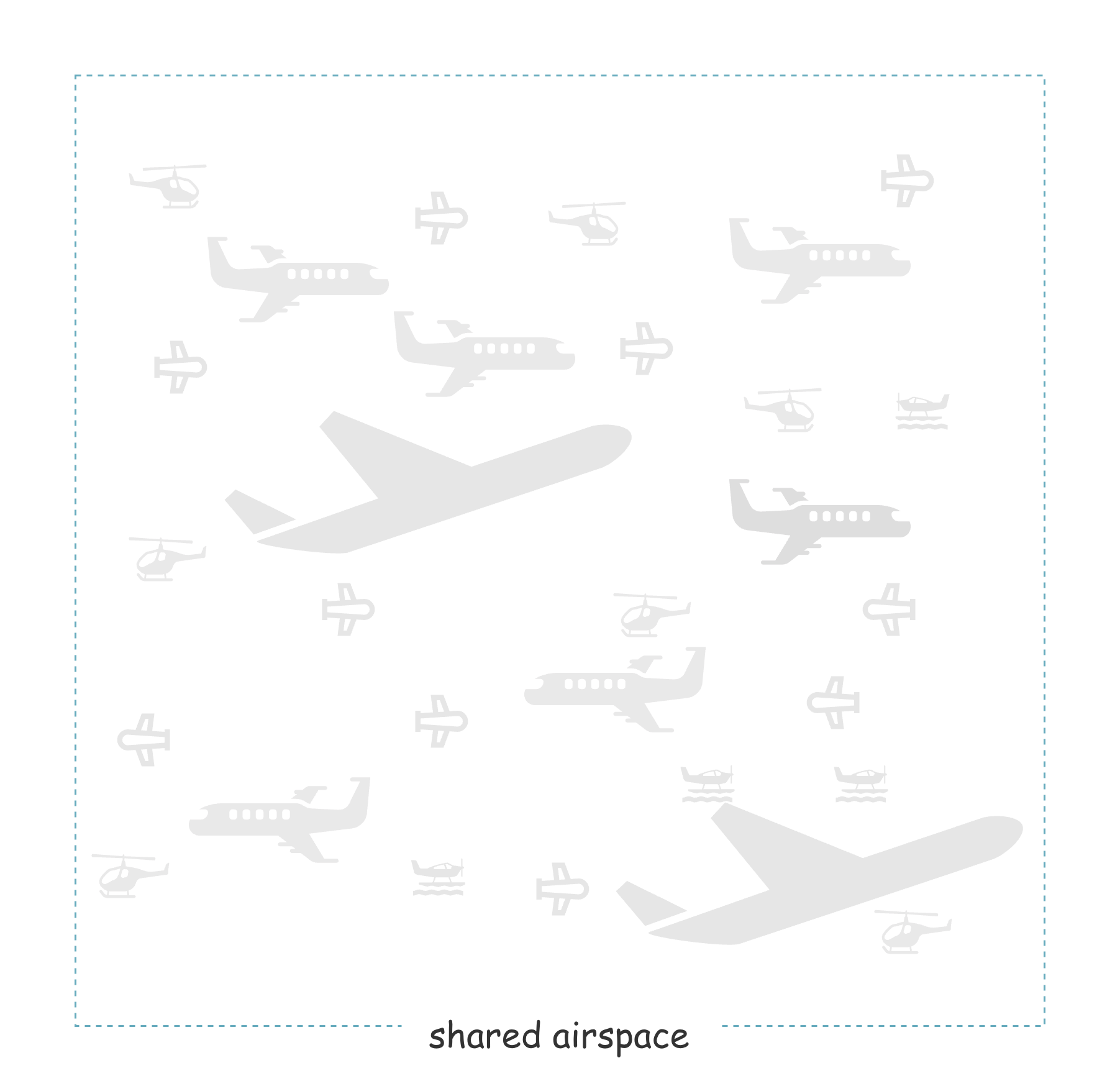
The variety of aircraft and pilot abilities is significant. There's no way to control where everyone is in every moment or what maneuver they're executing. Pilots have their missions, and we need them to be technically sound and creative – solving problems in real time. We also encourage our pilots to have pride in their craft, with enough autonomy to fly with flair.
This could be pandemonium.
Or, we can put some guardrails in place to help everyone fly safely and effectively.
Just like real life airspace, we use altitudes to coordinate.
Low altitude flyers: light, maneuverable, task focused
In our lowest architectural altitude, we have the helicopters, ultra-light and specialty aircraft. These pilots (and their small crews) are laser focused on performing specific missions or jobs that are shorter in duration, but nonetheless critical to the organization's outcomes.
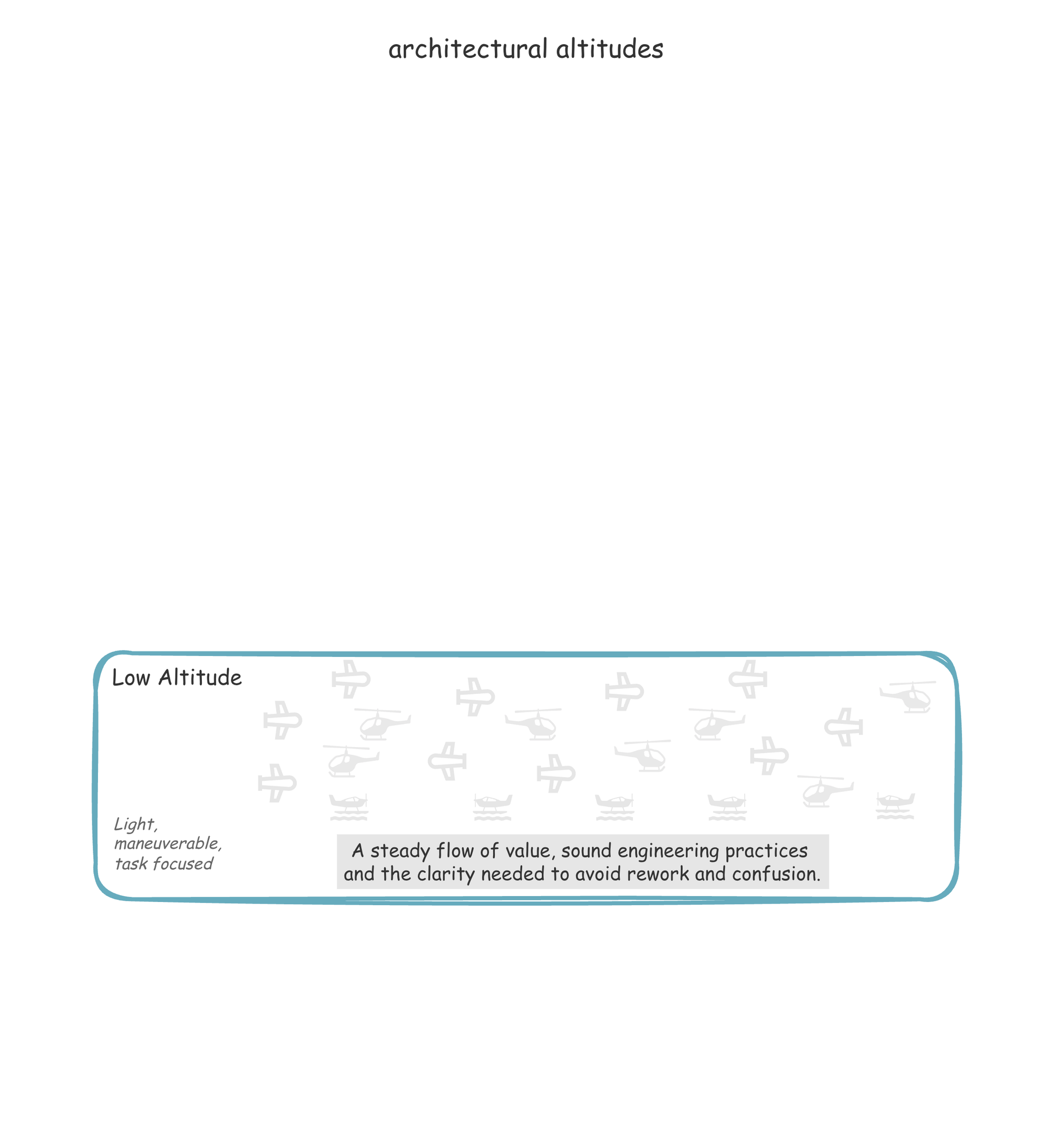
In your organization, these teams focus on delivery, execution, and iteration. Engineering teams, partners, and product teams are turning ideas into working systems. They handle turbulence at close range and rely on clear signals from above to keep priorities aligned.
Low altitude is where:
- Features are built
- Decisions are fast
- Feedback loops are tight
- Technical craft matters
- Pragmatism rules
The definition of good here: a steady flow of value, sound engineering practices, and the clarity needed to avoid rework and confusion.
Mid altitude flyers: regional routes
At mid altitude, the view expands, as does the aircraft. They can do more, but it takes more to move them. A more diverse crew needs to coordinate, and they can go further in each flight.
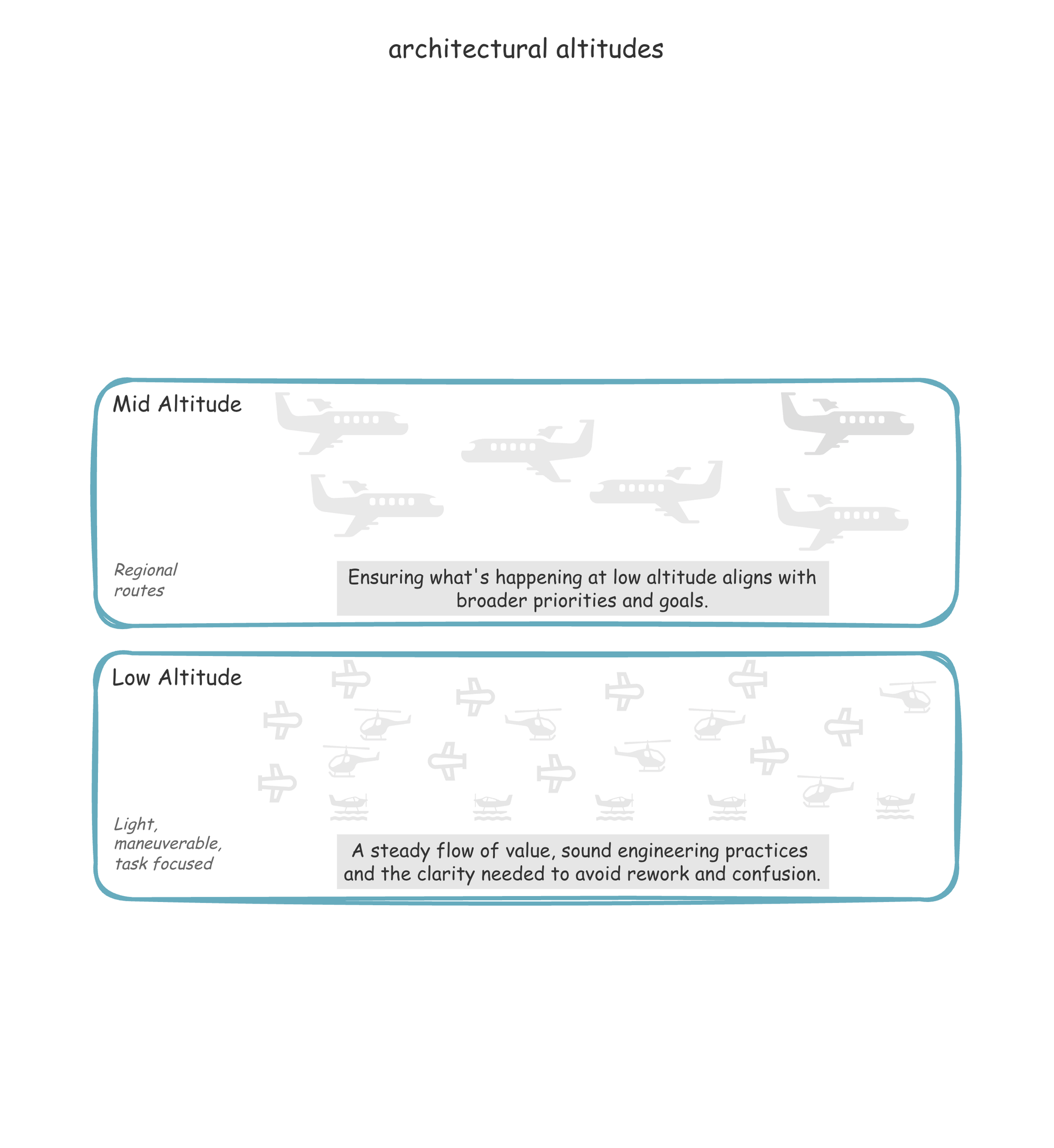
In technology, these teams begin to see how their work connects to others. Shared services, product groups, and domain leaders coordinate hand-offs, dependencies and sequencing.
This level is about:
- Integrating work across teams
- Maintaining momentum
- Breaking down delivery into coordinated runway plans
- Balancing speed with coherence
- Ensuring the RIGHT work is flowing
Good means: ensuring what's happening at low altitude aligns with broader priorities and shared goals.
High altitude flyers: large and long-range
At high altitude, we can see so much and dream of going almost anywhere! But to take these journeys, we need bulk and a lot of fuel.
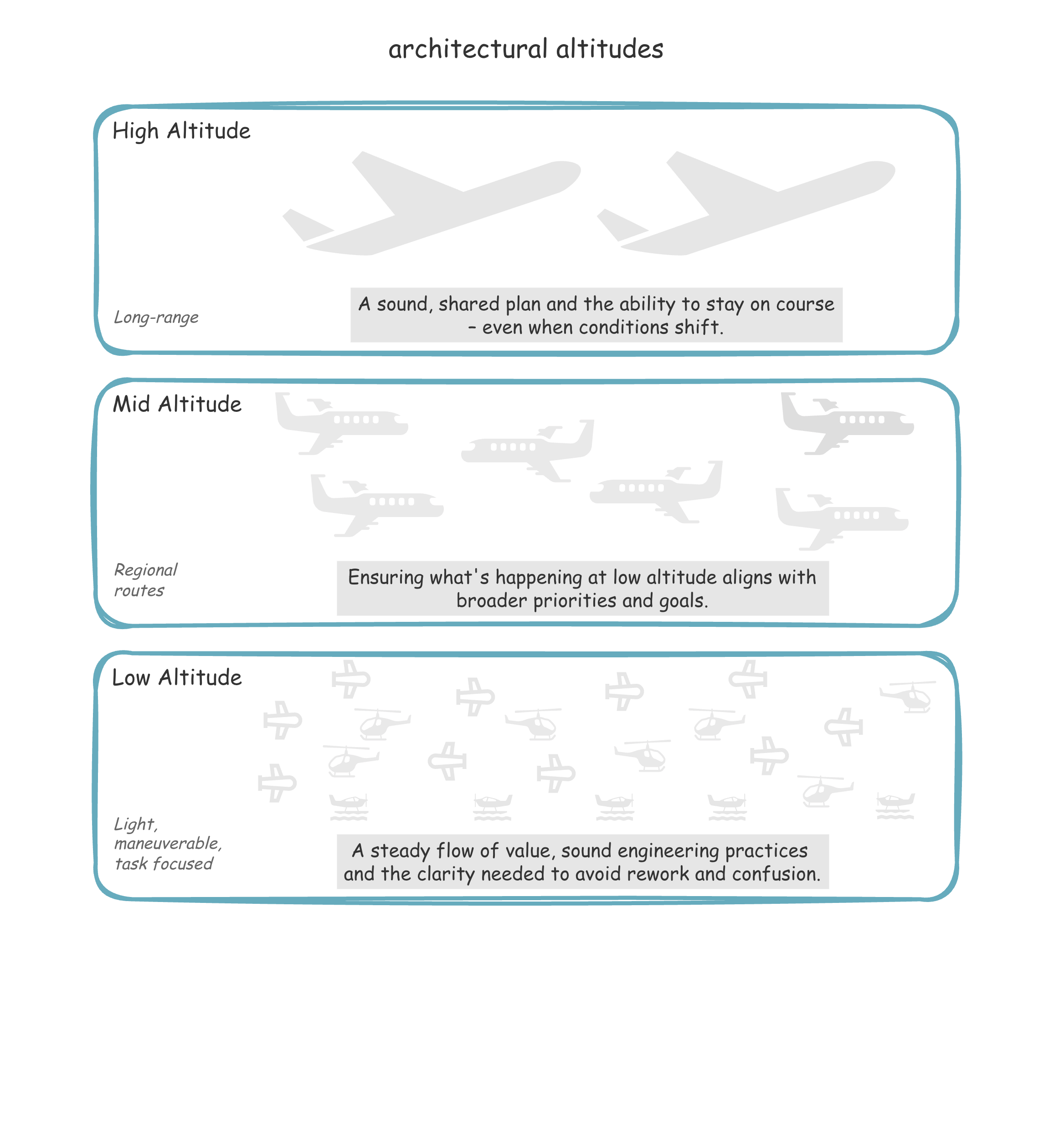
These are your enterprise product, strategy and architecture pilots. They are planners but also well-versed in pivots.
High altitude requires:
- Planning beyond the current cycle
- Anticipating turbulence and constraints
- Setting long-range direction
- Helping teams course-correct when needed
- Ensuring capacity, fuel, and purpose
No one wants to end up at an unexpected airport waiting for a refuel while the crew times out. These long-range journeys require preparation, flexibility, and perseverance.
The definition of good: a sound, shared flight plan and the ability to stay on course – even when conditions shift.
Air traffic control: coordination across altitudes
With so many planes in the air, coordination is essential. This is where air traffic control comes in – clear altitude rules, communication protocols, and awareness of the whole system.
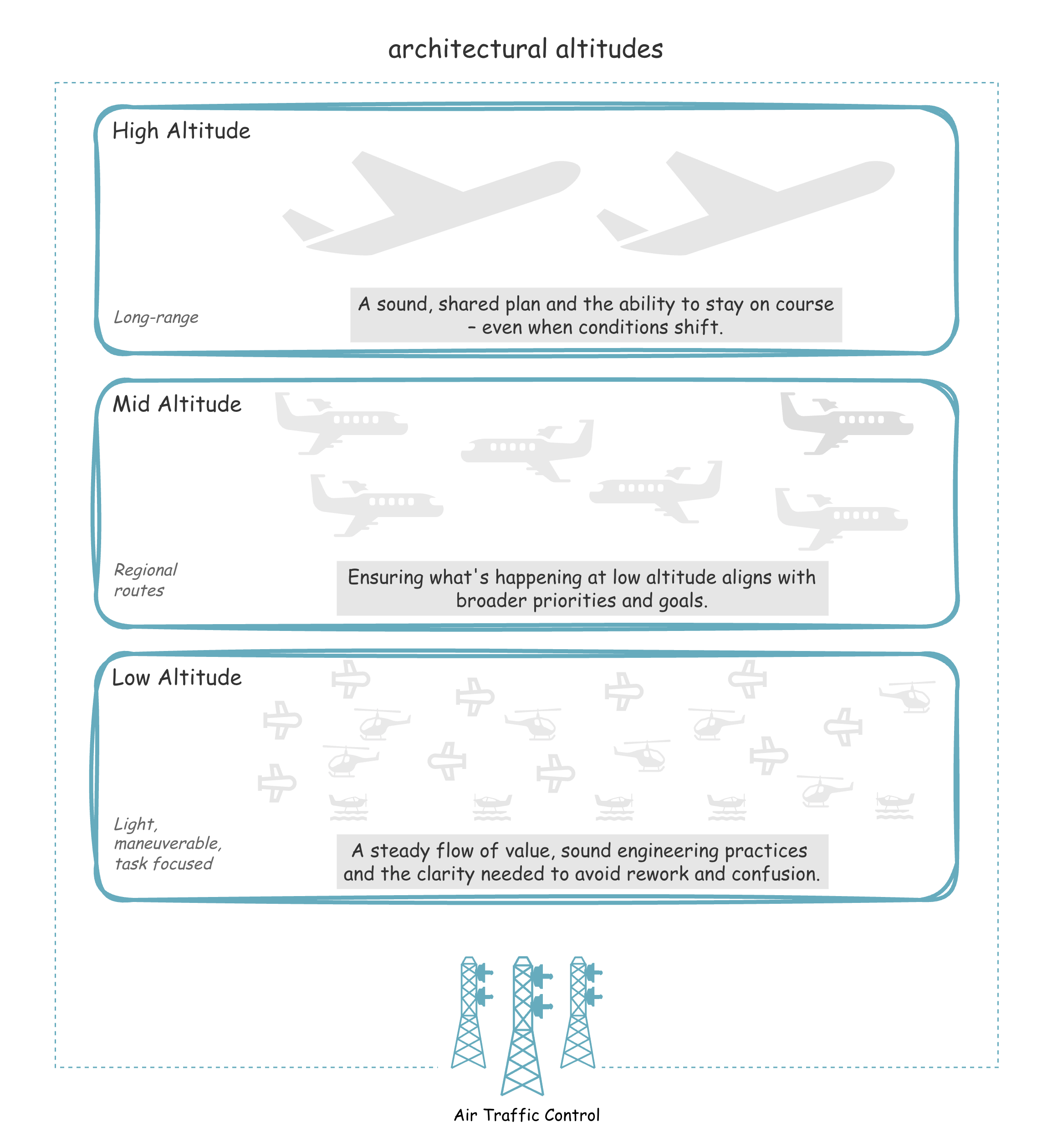
Good ATC ensures:
- High-altitude pilots don’t swoop into low-altitude airspace
- Low-altitude teams don’t overextend into long-range planning
- Communication flows cleanly
- Conflicts are resolved early
- Everyone knows where they are and where they’re going
This is where enterprise architecture can shine – facilitating clarity, coherence, and communications across all altitudes.
Architectural altitudes: translating strategy to delivered value
Architectural altitudes describe how your organization's most ambitious goals reach all of your pilots, who are conducting maneuvers in shared airspace simultaneously. This is the first piece of the puzzle describing what we are trying to achieve and why in your enterprise architecture.
Strategy (high altitude) = Build a shared vision and runway that aligns everyone
Integration & Flow (mid altitude) = Create steady flow connecting strategy to delivery
Delivery (low altitude) = Deliver quickly and reliably without breaking things
Architectural altitudes give us clarity and alignment.
Why? We want to align our pilots to move fast, safely.
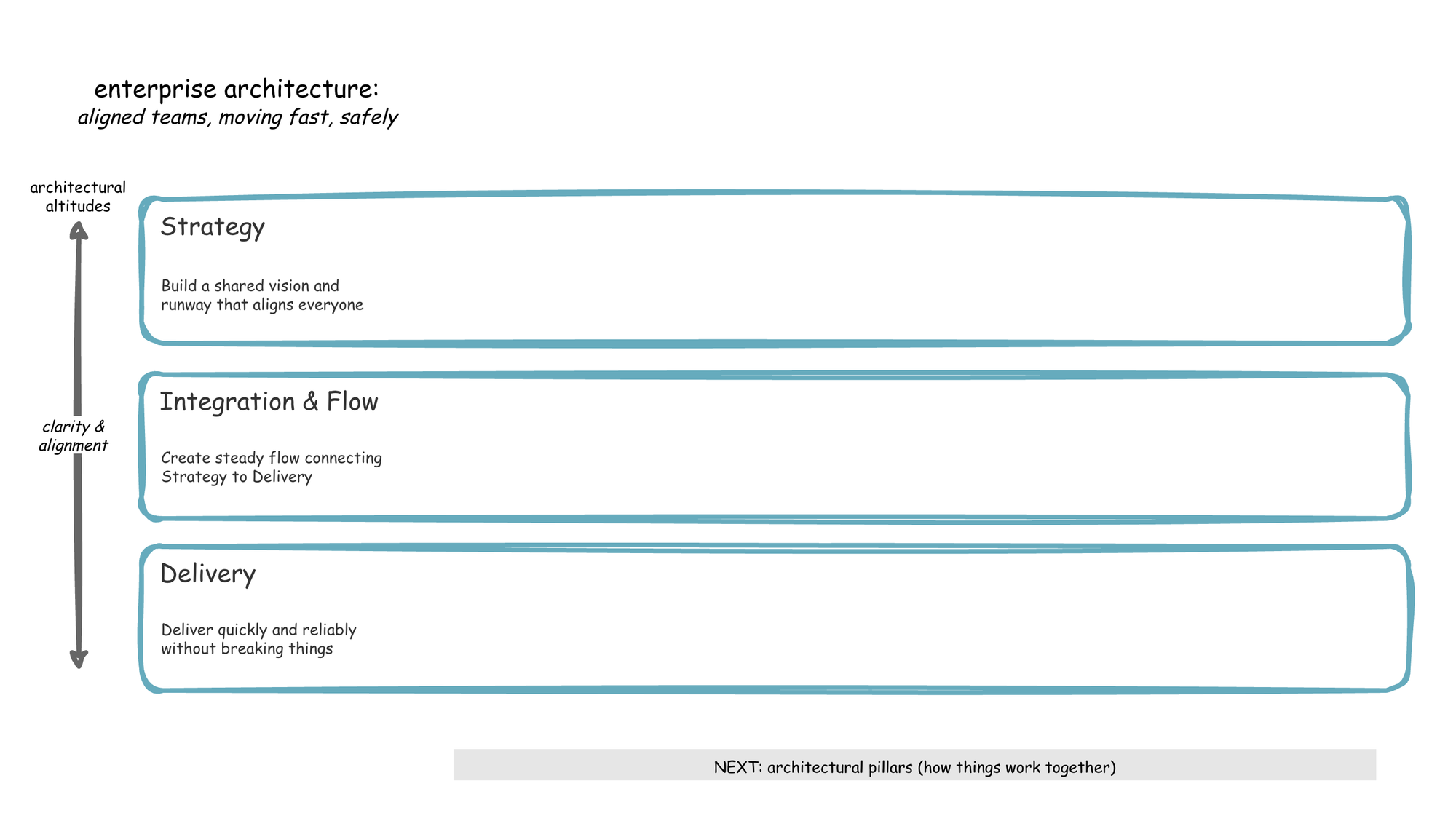
In the next post, we'll begin to think about "how" the altitudes work through people, process, data, applications and technology architectural pillars.
Reflection
Before you move on, pause for a moment:
Can you recognize the architectural altitudes in your organization?
Which altitude is most chaotic right now?
How effective is your air traffic control at coordinating between them?
References
- None
Have questions or thoughts about this post?
Email me at hello@eaforeveryone.com or connect with me on LinkedIn.